From isolation to integration: a new vision for youth justice in Austria

Youth detention is a crucial issue throughout Europe, as stakeholders pursue more humane, effective, and community-focused ways to support young people facing deprivation of liberty.

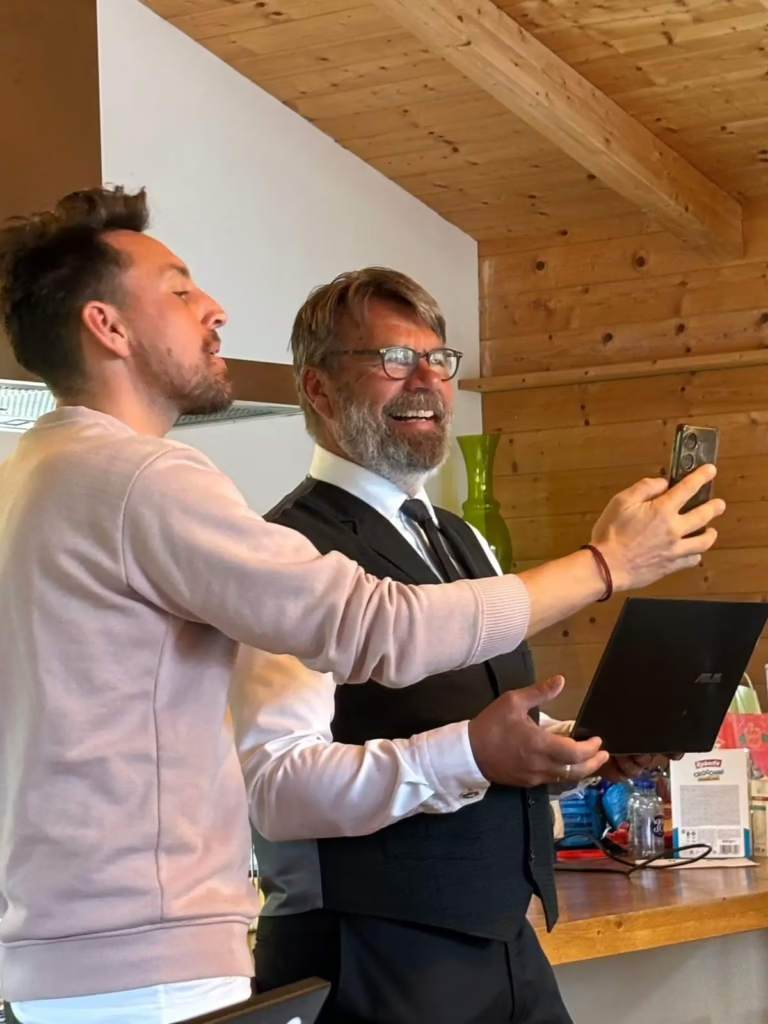
In Austria, research initiated by Salzburg Children’s and Youth Advocacy sparked a collaboration with the NGO Richtungswechsel. A joint visit to the small-scale facility of Seehaus in Germany, together with Salzburg’s prison director, Colonel Knebel, further fuelled interest in practical alternatives for Austria’s youth detention system.

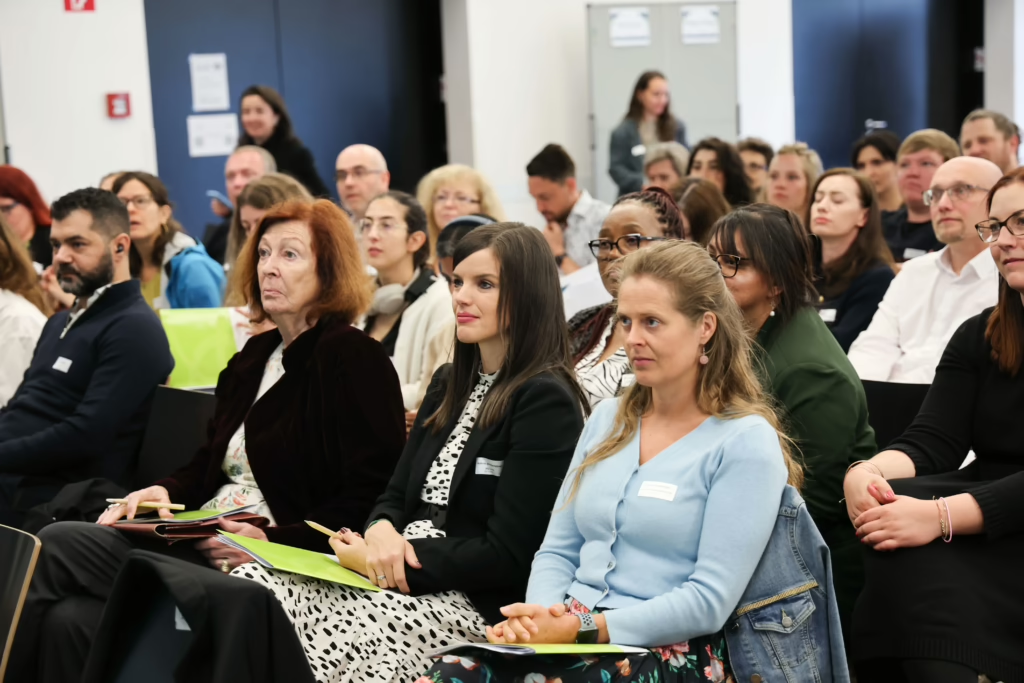
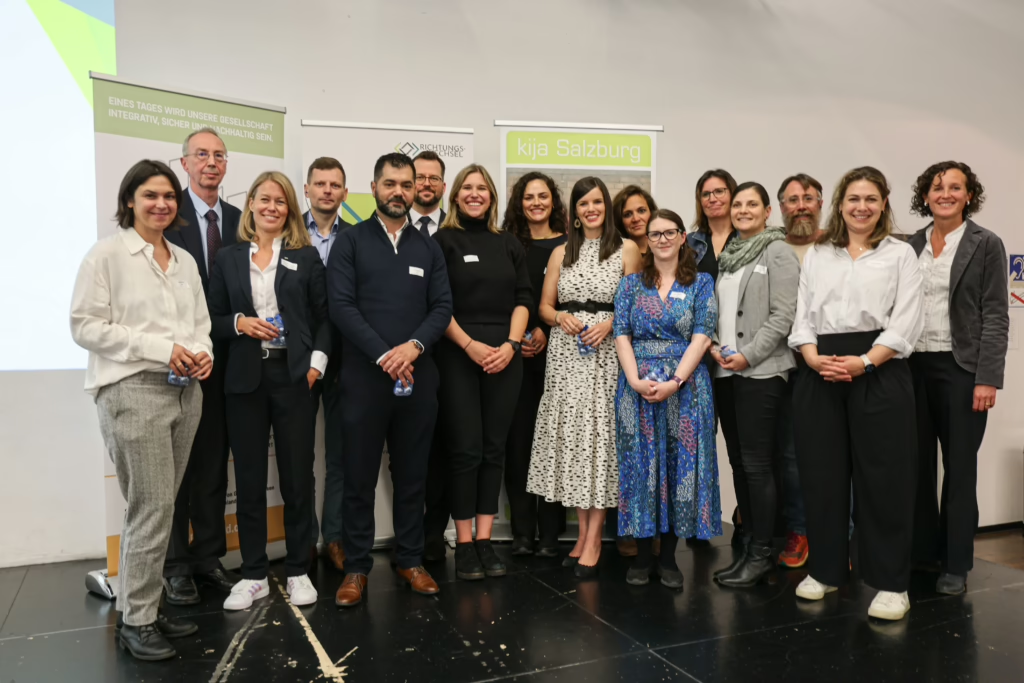
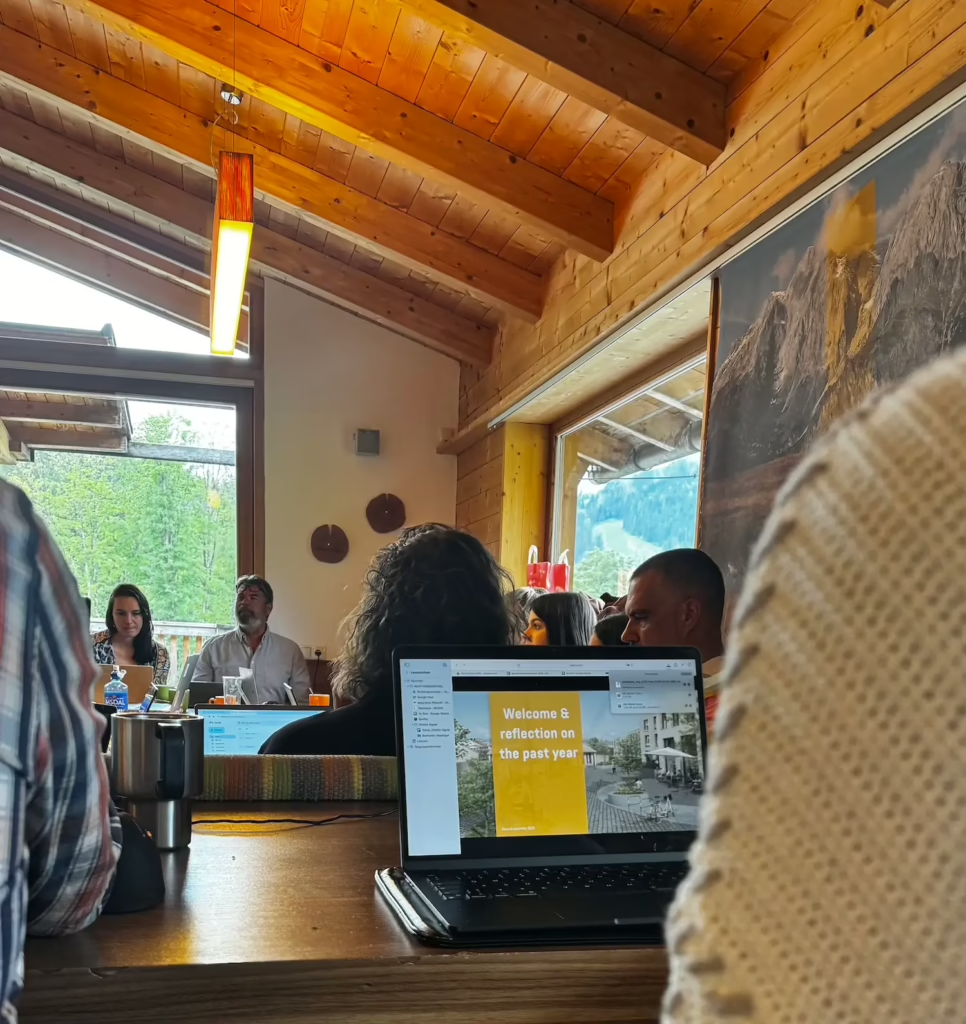
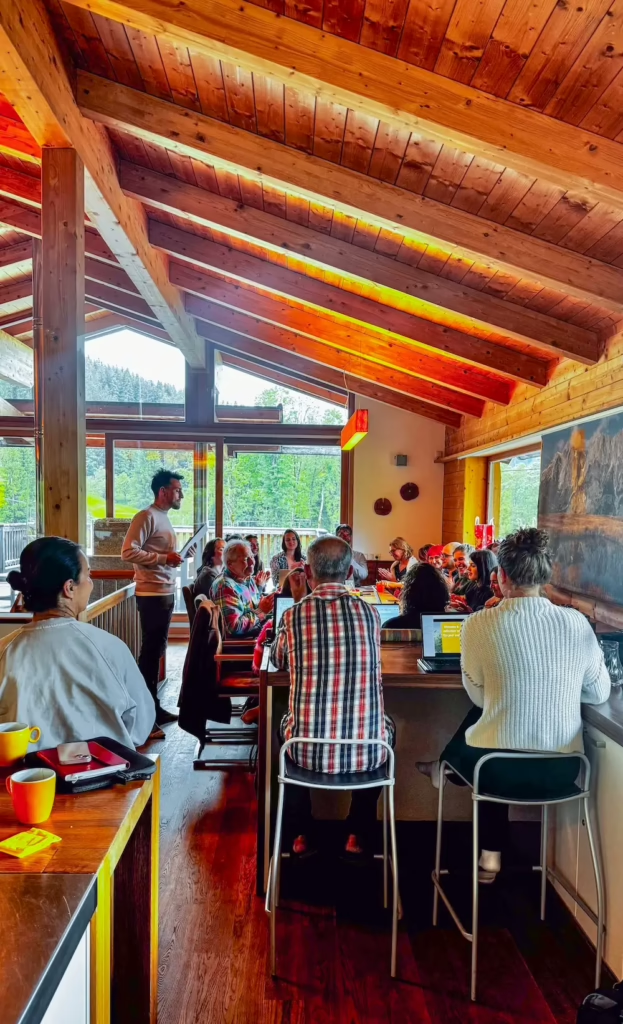
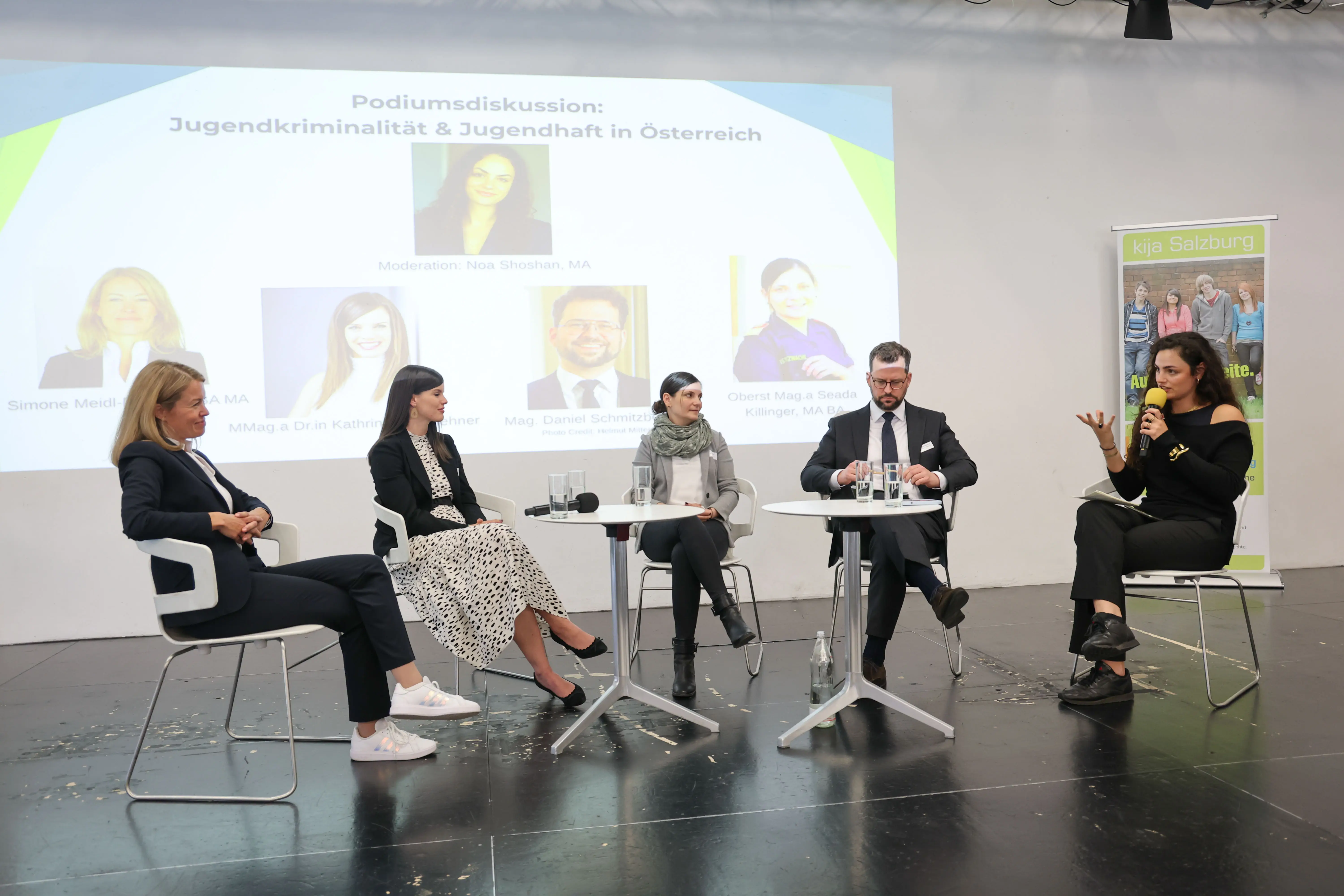
In May 2025, the first Youth Custody Conference took place in Salzburg. Richtungswechsel and Salzburg Children’s and Youth Advocacy initiated a meaningful dialogue about what a child-centred, rights-based, and progressive model of youth detention could look like in Austria.

Over 120 experts from 16 countries gathered to share insights and examine the feasibility of small-scale custodial alternatives. The conference showcased inspiring international practices and explored how such approaches might be adapted to Austria’s legal, political, and social contexts.

Institutional perspectives: Austria and beyond

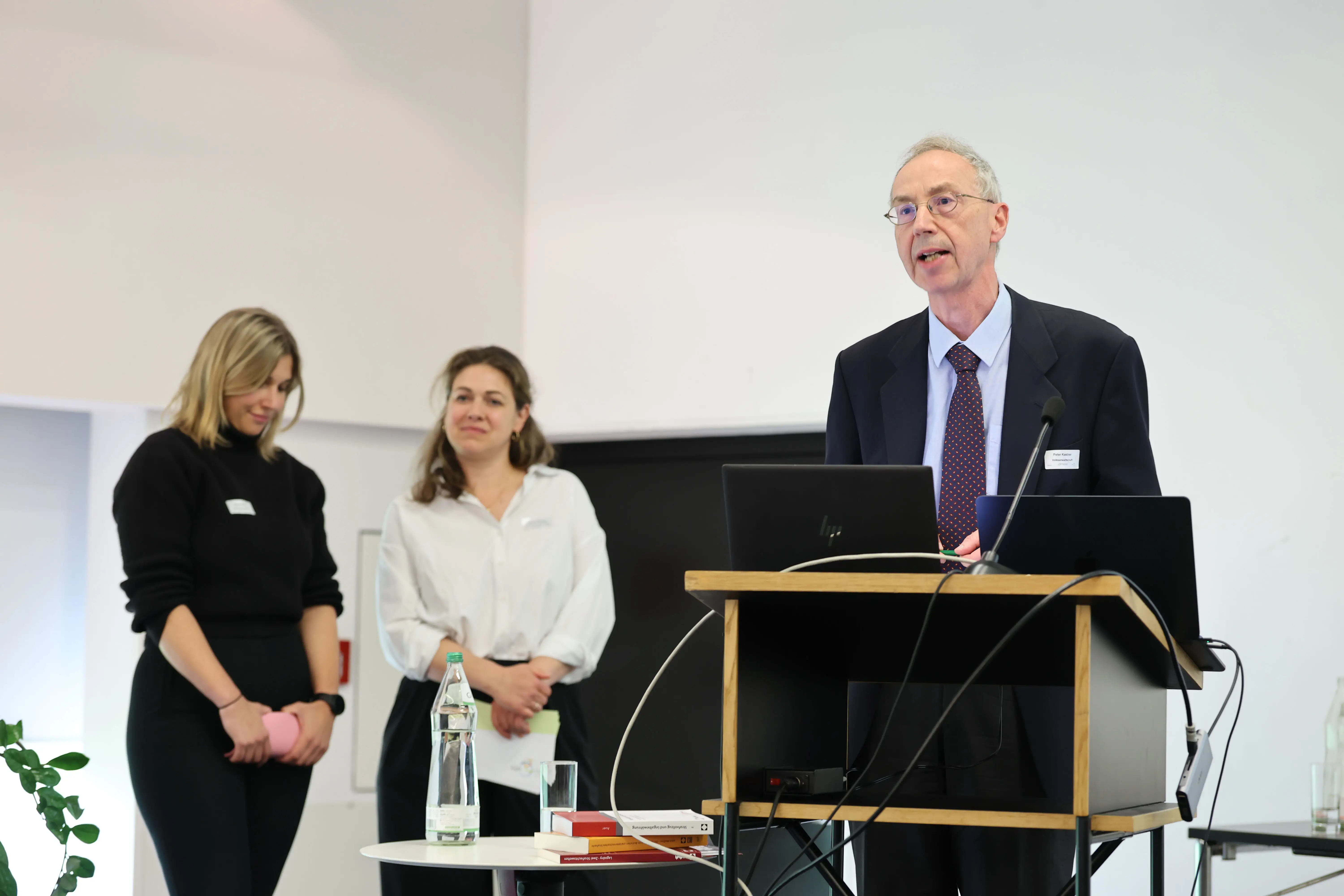
The conference opened with insights from Katharina Dürr of the General Directorate for the Austrian Prison System. Dürr outlined the current state of Austria’s youth detention framework, emphasising challenges such as overcrowding, limited family proximity, and restricted access to support services within existing institutions. Her presentation highlighted the urgent need for reform to support young people in detention better and facilitate their (re)integration. 

Next, Karel Dvořák, the Czech Republic’s Deputy Minister of Justice,  described ongoing efforts in Czechia to move away from large-scale incarceration towards smaller, target group–oriented facilities more closely embedded in local communities. He showcased promising examples, such as an open prison for men and a probation house supporting reintegration, which already reflect key approaches to incarceration like dynamic security and trust-based relationships.

He emphasised the Czech Republic’s collaboration with the RESCALED network, notably through RUBIKON, the Czech member of RESCALED, and underlined the government’s intention to develop a context-specific detention house facility. Dvořák concluded with a clear commitment to realising the EU Council’s call for small-scale detention, stating:

His contribution reflected both a grounded awareness of current systemic challenges and a forward-looking dedication to transforming imprisonment into a more humane, reintegrative, and community-connected system.

Setting a new vision

Colonel Dipl. – Päd. Dietmar Knebel from the Austrian Ministry of Justice officially launched the conference, emphasising political will and the need for a justice system that prioritises young people’s development and societal safety.

Building on this foundation, Noa Shoshan, Knowledge Manager at RESCALED Europe, presented the movement’s core principles and vision: a paradigm shift from large prison institutions toward small-scale detention houses embedded in and supported by local communities.

She described these houses as accommodating a maximum of 30 residents, working closely with local services, schools, neighbours, and civil society organisations. She emphasised the need for a collective effort. RESCALED’s work goes beyond policy; it seeks to shift societal narratives around incarceration through knowledge sharing, raising awareness, and the cross-national exchange of best practices.

Importantly, Shoshan stressed that there is no one-size-fits-all model:

Therefore, implementation must be tailored to context and involve early community engagement to address scepticism and promote shared responsibility.

Overall, detention houses offer a more sustainable and effective approach to incarceration. However, they must be part of a broader ecosystem prioritising integration, differentiation, and community-based care.

Political momentum is increasing: all 27 EU Ministers of Justice recently issued a joint statement endorsing small-scale detention, and the UN Human Rights Council emphasised these models in a resolution on social (re)integration.

Model from practice: Estonia and Germany

Stanislav Solodov from Estonia’s Ministry of Justice outlined two initiatives to support young people’s reintegration. These efforts reflect Estonia’s broader strategy of combining state-led policy with NGO-driven practices to promote long-term change.

The monitoring programme connects young people aged 14 to 20 with trained mentors six months before their release. Building trust is a key aspect of supporting personal growth, helping to shift values and attitudes, and ultimately enabling sustainable behaviour change. The second initiative is the halfway house, operated in partnership with the Village of Hope. Up to 20 young people live in a structured, family-like environment in these small-scale residential settings.

Solodov emphasised that a minimum of nine months of long-term support is critical for success. Shorter interventions show little effect.

From Germany, Ulrich Weinhold and Irmela Abrell shared insights into the Seehaus e.V. facilities, where adolescents in conflict with the law live in supervised homes together with mentor families. Daily life in Seehaus follows a clear and structured routine, including school attendance, vocational training, shared meals, household responsibilities, sports, and group discussions. This everyday structure is designed to promote responsibility, rhythm, and a sense of community.

Instead of control and punishment, daily life is built on trust, accountability, and positive relationships.

A cornerstone of Seehaus is its commitment to restorative justice. Crime is seen as harm done to human relationships, and change is facilitated through dialogue, accountability, and active involvement of survivors, peers, and the community. Through this approach, Seehaus promotes communal living as a route to reintegration, focused on personal development and constructively resolving conflicts.

Austria’s opportunity to lead change

Throughout the Youth Justice Conference, participants expressed a common belief: youth detention should not merely aim to reduce harm but must actively support young people in growing, restoring relationships, and envisioning a future beyond deprivation of liberty. While some voiced concerns that Austria risks falling behind, others emphasised that the necessary momentum is already present. What is needed now is bold leadership and practical steps forward. 

Austria now stands at a pivotal crossroads. Experts, practitioners, and policymakers alike signalled a strong desire for transformation; one that embraces small-scale, human-centred approaches rooted in dignity, participation, and community.

The conference clarified that the necessary foundations are already in place: international inspiration, local expertise, and a wealth of practical models. Yet, the political will and societal vision remain to bring them to life. The examples of RESCALED, Estonia, and Seehaus, along with the voices of the Austrian professionals, highlight what is possible: an approach to detention that restores dignity, supports growth, and aligns justice with social integration. 

By initiating a pilot project grounded in these values, Austria has the chance to reform its system and contribute meaningfully to a growing European movement. A system that reimagines detention as a space for support, accountability, hope, and that gives young people a chance.
General Assembly 2025: welcoming new members and strengthening the RESCALED movement

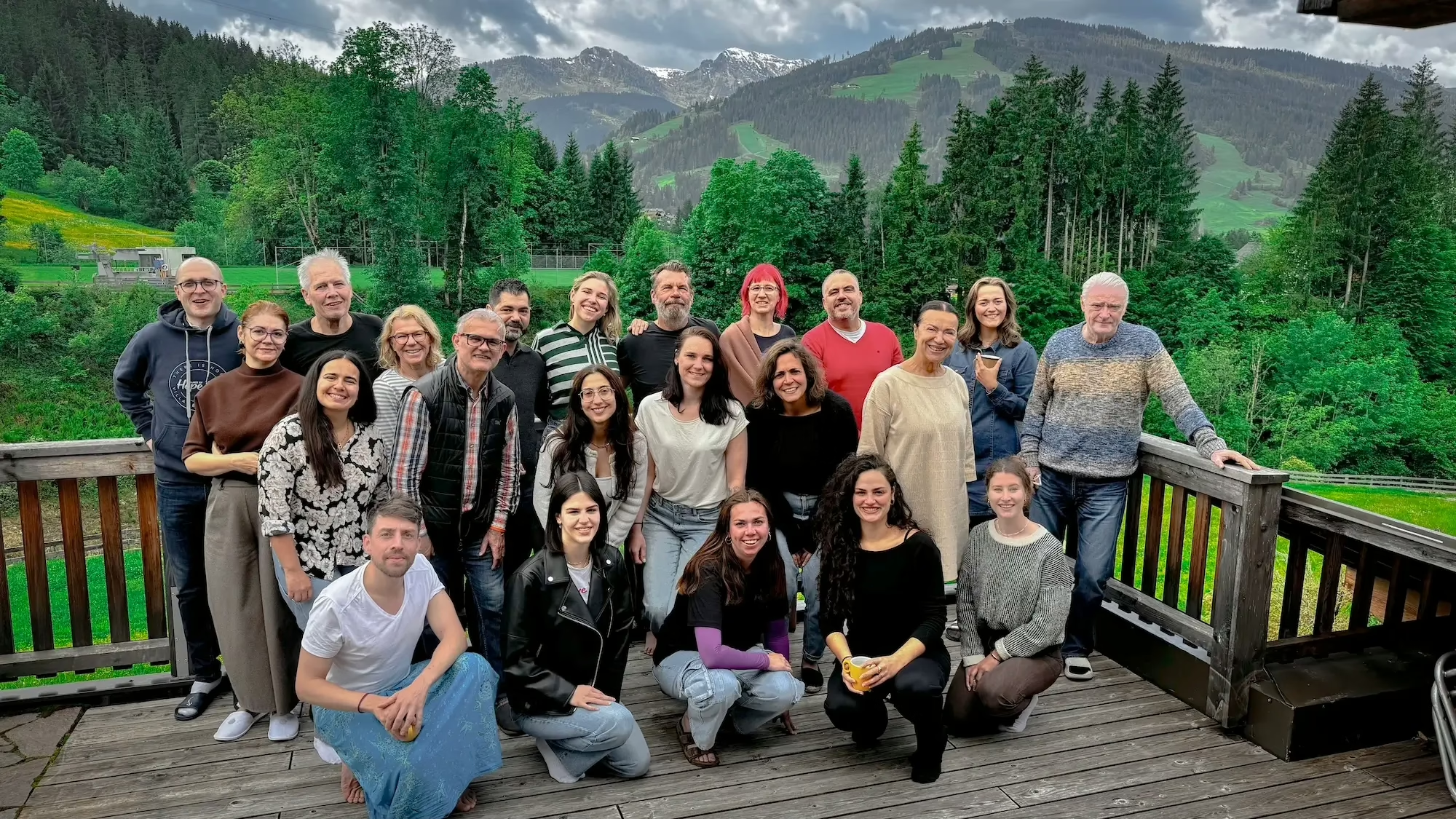
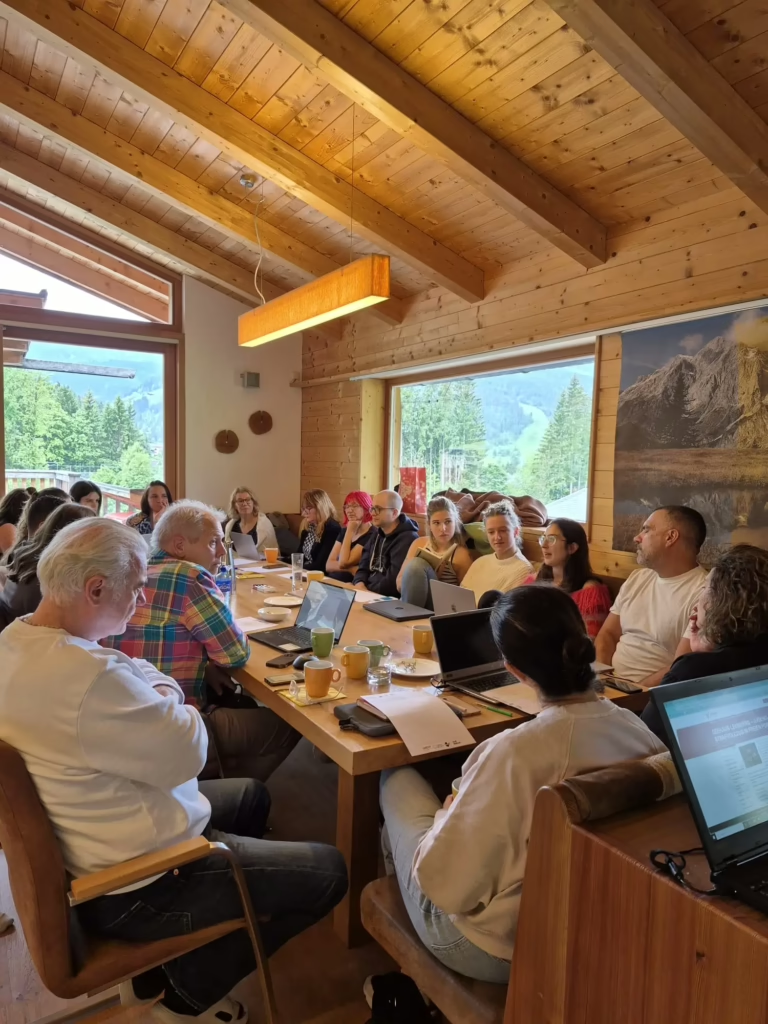
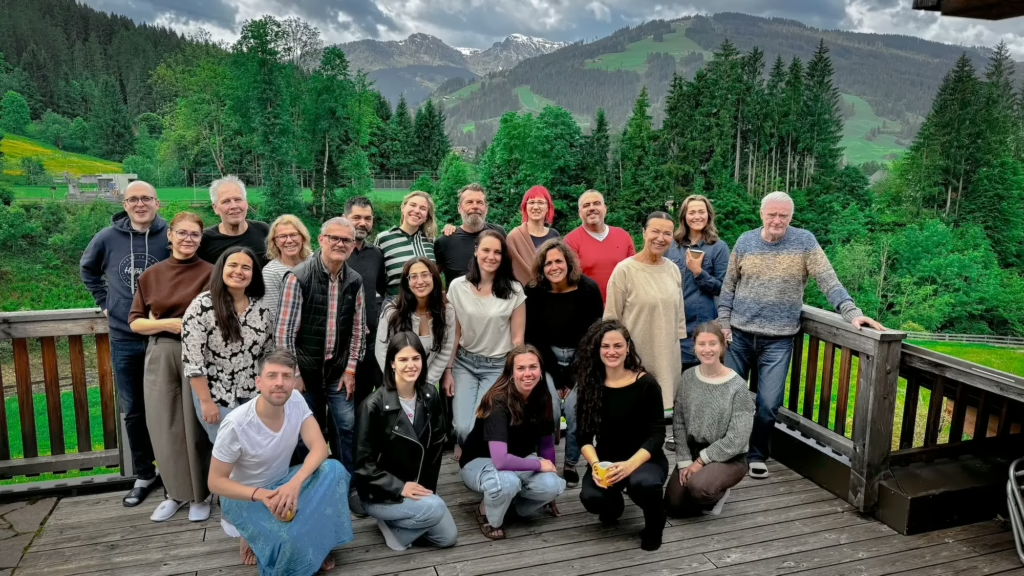
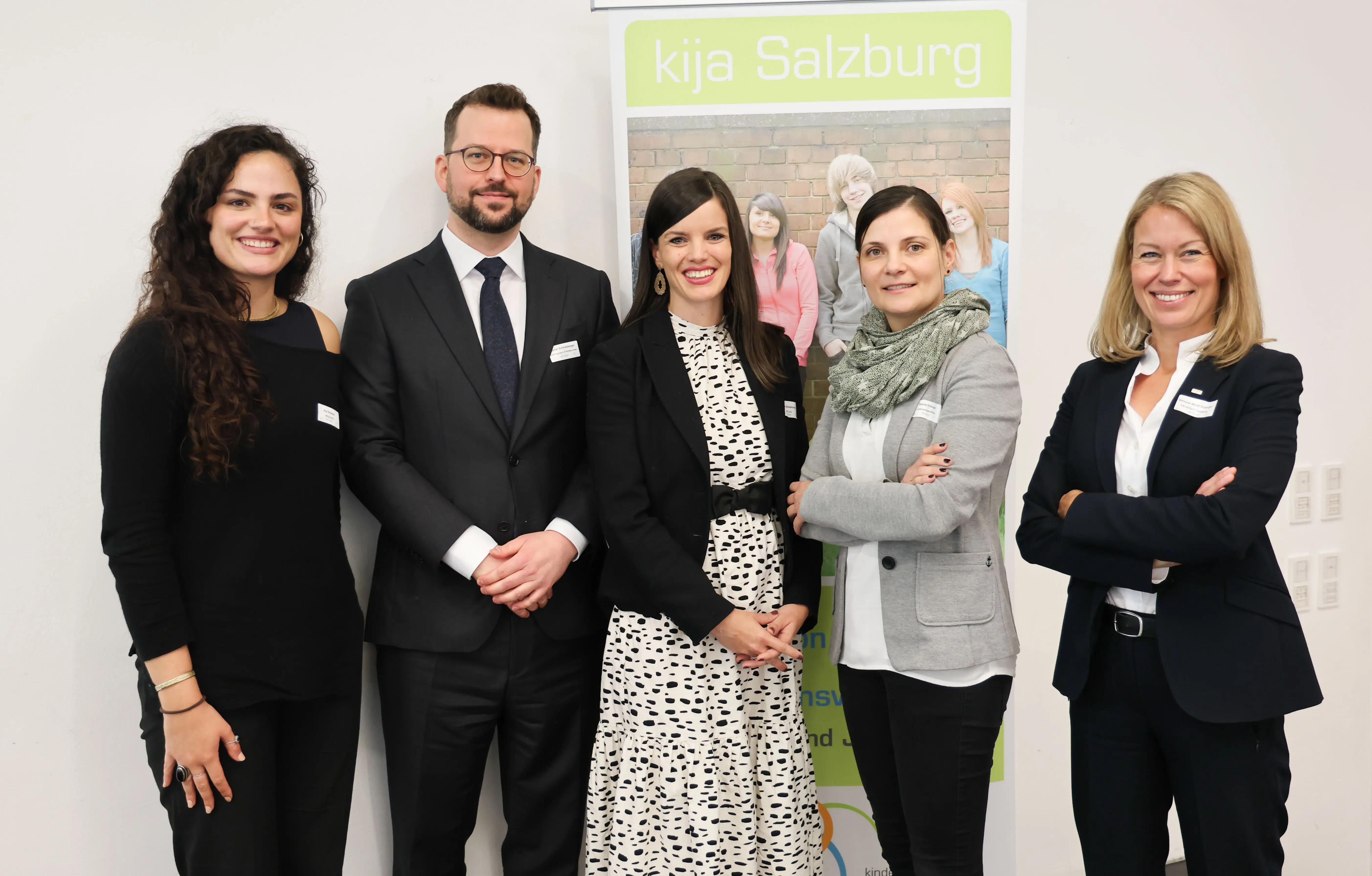
On the 23rd of May 2025, RESCALED held its annual General Assembly in Salzburg, Austria. This year’s event marked a meaningful gathering to reflect, (re)connect, and look ahead.

In addition to reflecting on the key highlights and achievements of the past year, including our growing impact and the expanding reach of the RESCALED movement across Europe. We took time to (re)connect, with new members bringing fresh perspectives, and long-standing members sharing valuable insights and impact. But most importantly, we looked ahead together, reaffirming our shared vision for the future and the path we are taking as a movement.

This year, we were proud to welcome three new members who each enrich our network with their own unique strengths and commitments:

Diagrama Foundation (United Kingdom)

Diagrama Foundation supports vulnerable children and young people in custodial and care settings. Their approach is based on trauma-informed care, restorative justice principles, and child development theory. Operating small-scale, therapeutic residential settings, that move away from punitive, institutional approaches and instead prioritise relational security, personal growth, and reintegration into the community. Diagrama has charity status in England and Wales and is part of Fundación Diagrama, one of Spain’s largest NGOs.

Jalta – Cultural and Social Centre (Slovakia)

Based in Slovakia, Jalta works at the intersection of community engagement, policy advocacy, and creative methodologies. Through projects like #stopdiscrimination they address systemic issues affecting vulnerable groups and promote inclusive reform through public advocacy, workshops, and educational campaigns, while projects like inVulnerables/DAR and Theatregeneration offer creative and educational methodologies that support the reintegration of justice-involved youth and vulnerable individuals through European collaborations.

Dr. Olta Qejvani (Albania)

Dr. Olta Qejvani is a lecturer in European Law and has over a decade of experience across academia, civil society, and public administration. She has represented Albania at the Congress of Local and Regional Authorities at the Council of Europe in Strasbourg, where her project ‘Different local communities, same youth perspective’ was recognized as one of the best initiatives for youth participation at the local level.

Board elections

We also proudly re-elected Gonçalo Noronha Andrade and Birte Metz to the RESCALED Board. Their ongoing leadership will continue to strengthen and guide our movement.

We look ahead with energy and purpose, moving forward as a European movement with members across 20 countries, committed to driving justice reform. 

Women in detention: Challenges and new approaches

Around the world, women make up a small but growing group within the prison population. According to the World Prison Brief1 over 733,000 women and girls are incarcerated globally, accounting for about 6.8% of the total prison population worldwide. In Europe, the proportion is even lower, around 5% of people in prison are women2.

While this percentage may seem small, it masks a deeply concerning trend: the dramatic and disproportionate growth in women’s3 imprisonment. Since 2000, the global women prison population has surged by 57%, compared to a 22% increase for men over the same period4. This rapid rise is particularly severe in certain regions and countries. Both Asia and Oceania have seen their women prison populations more than double since 2000, with countries like Cambodia, Indonesia, and Brazil experiencing explosive growth. The highest numbers of incarcerated women are found in the USA (174,607), China (145,000), and Brazil (50,441)567.

While Europe has seen a slight overall decline in women’s imprisonment, patterns vary significantly by country 8. Excluding Russia, the women prison population in the rest of Europe actually grew by about 25% from 2000 to 20249. Women make up approximately 5-6% of the European prison population, with notable variations, from as high as 9.5% in Malta and 8.5% in Czechia to as low as 3.2% in France and 3.7% in Bulgaria10. Some countries like Poland see their women prisoner population more than double since 200011.

Understanding women’s pathways to incarceration

Incarcerated women often follow different pathways into crime than men, reflecting different life experiences and vulnerabilities12. Their paths are frequently characterized by economic hardship, poverty, low levels of education, lack of employment opportunities, and homelessness. 

While men dominate statistics for violent crime, women are more often imprisoned for non-violent offenses, particularly property and drug-related crimes13. For example, in England and Wales, shoplifting accounts for 40% of women’s prison sentences under six months, while almost two-thirds (64%) of prison sentences given to women were for less than six months14.

A system not designed for women

Prison systems worldwide share a fundamental problem: they were originally designed by men and for men15. As women constitute a minority of the prison population, their specific needs are often overlooked within this man-centric framework. The ‘one-size-fits-all’ approach fundamentally fails to provide a safe, humane, or rehabilitative environment for many incarcerated women.

Key challenges include:

  1. Histories of trauma and mental health: 

Women behind bars are more likely than men to have suffered abuse and trauma prior to incarceration. Over 90% have experienced some form of childhood trauma, including physical or sexual abuse, neglect, bullying, or witnessing extreme violence16, often continuing into adulthood with intimate partner violence.

This continuous exposure to trauma contributes to high rates of mental health issues17, with studies showing 57% of women under probation supervision in Ireland experiencing mental health problems (compared to 40% of men)18.

  1. Reproductive and healthcare needs: 

Women have specific reproductive and sexual healthcare needs that prisons commonly fail to address19. Many incarcerated women are of child-bearing age and approximately 5-10% of women are pregnant when admitted to prison20, requiring prenatal care, proper nutrition, and childbirth arrangements. Even basic reproductive health can be neglected in prisons, with inadequate access to gynecological services, mammograms, pap smears, and even menstrual hygiene products.

  1. Safety and dignity

Women in prison are particularly vulnerable to sexual harassment, abuse, and violence, perpetrated by both staff and fellow incarcerated individuals21. Lack of privacy, supervision by male staff in sensitive situations, and invasive or humiliating search procedures can violate dignity and exacerbate feelings of vulnerability and fear. Although International standards recommend searches be conducted by women staff, yet this is not always implemented22.

  1. Family responsibilities and caregiving

Most incarcerated women are mothers, and many were the primary caregivers for their children prior to arrest23. In Italy, at the end of 2021 nearly 64% of women in detention were mothers24, and in the UK, an estimated 17,500 children were separated from their mothers by imprisonment in 2020. This separation doubles the risk of poor mental health in children and increases their risk of poverty and housing insecurity25. Traditional prisons, with distant locations and limited visitation, make maintaining family bonds extremely difficult.

International standards and reform movements

The international community has formally recognized the inadequacy of treating incarcerated women identically to men and the need for gender-specific approaches. International standards have been developed to address these issues, like the United Nations Bangkok Rules (2010). These rules set standards for non-discrimination and gender-responsive approaches, covering admission procedures, healthcare, humane treatment, and family contact26 and they emphasize the need for alternatives to imprisonment for women27.

The Council of Europe has also addressed women’s incarceration through the European Prison Rules (revised in 2006, updated in 2020)28, which emphasize that imprisonment should be a last resort, especially for mothers of young children. These standards call for prison conditions that respect human rights, tailored healthcare, protection from abuse, and support for family contact.

Despite these detailed international and European standards, a significant implementation gap persists. 

RESCALED Movement

For women experiencing incarceration large-scale prisons often fail to meet their (most basic) needs. But what if women were incarcerated in a more humane, community-integrated setting? 

Detention houses provide exactly that through three key principles:

Small-scale: Detention houses typically accommodate only about 8 to 30 residents, creating more personal, human-centered environments. Finland’s Vanaja Prison exemplifies this approach by housing up to 57 women in small-scale house units of five people each, plus a special family house for parents with children. This village-like arrangement creates a more intimate environment where staff can develop meaningful relationships with each resident and tailor support to individual needs, particularly helpful for women who have experienced trauma.

Differentiation: This principle means placing individuals in the context best suited to their specific circumstances. In these kinds of contexts, staff are trained in gender-responsive practices and the programming is tailored specifically for women’s needs, covering topics like healthy relationships, parenting skills, and women’s health.

The prison for women in Řepy (Czech Republic) demonstrates differentiation through its specialized selection process and treatment approach. With a capacity of 56 women, Řepy divides residents into smaller groups based on security level. 

Community-Integration: Detention houses are embedded in the community rather than isolated, allowing residents to remain literally and figuratively closer to normal life. Scotland’s Community Custody Units illustrate this well, designed with family-friendly visit areas including community rooms and gardens that create child-friendly environments. This integration reduces stigma, improves access to community services like healthcare and education, and makes regular family visits more feasible.

The economic argument for community-based solutions is compelling. Research shows that the cost per woman at Women’s Centres ranges from £1,223 to £4,125 depending on their level of need, while a place in prison costs £52,121 per year. Despite this clear cost advantage, investment in Women’s Centres tends to be short-term, inconsistent, and inadequate, limiting their potential impact29.

By shifting from large prisons to detention houses, RESCALED envisions a justice system that is not only more humane, but also more effective for society.

Women benefit from environments that respect their dignity, address their trauma, and keep them connected to their families. Communities benefit as well: because small-scale, community-integrated detention houses are more transparent and oriented toward reintegration, they can reduce recidivism and aid public safety in the long run.

For women in detention, who have too often been unseen and underserved, detention houses offer a chance to be treated as people, not statistics, as mothers, workers, and community members who, with the right support, can successfully turn their lives around.

About the WOMEN Project: To address the challenges outlined in this blog post, RESCALED is proud to be leading the “Workspace for Mapping, Engaging, and Networking with, for, and by Incarcerated Women” (WOMEN) project. Click here to learn more.

  1. Institute for Crime & Justice Policy Research. (2025, February). Female prison population growing faster than male, worldwide. World Prison Brief.  ↩︎
  2. Irish Penal Reform Trust. (2024, June) . Council of Europe: ‘SPACE I’ Annual penal statistics: Prison Populations 2023.  ↩︎
  3. Throughout this text, we use the term “women” instead of “female” to center the social and gendered dimensions of incarceration. Where sources use the term “female” (e.g., in data sets or reports), this reflects their original language. Our choice aligns with person-centered, gender-responsive language. ↩︎
  4. Institute for Crime & Justice Policy Research. (2025, February). Female prison population growing faster than male, worldwide. World Prison Brief. ↩︎
  5. United Nations Office on Drugs and Crime. (2021, June). Data Matters No. 1: Nearly twelve million people imprisoned globally, nearly one-third unsentenced with prisons overcrowded in half of all countries.  ↩︎
  6. Institute for Crime & Justice Policy Research. (2025, February). Female prison population growing faster than male, worldwide. World Prison Brief. ↩︎
  7. Webster, R. (2025, February). Global female incarceration on the rise. Russell Webster. ↩︎
  8. Institute for Crime & Justice Policy Research. (2025, February). Female prison population growing faster than male, worldwide. World Prison Brief. ↩︎
  9. Fair, H., & Walmsley, R. (2022, October). World Female Imprisonment List (5ª edition). Institute for Crime & Justice Policy Research. ↩︎
  10. Eurostat. (2025, April). Prison statistics. Statistics Explained. ↩︎
  11. Fair, H., & Walmsley, R. (2022, October). World Female Imprisonment List (5ª edition). Institute for Crime & Justice Policy Research. ↩︎
  12. Council on Criminal Justice. (2024, August). Women’s justice: A preliminary assessment of women in the criminal justice system.  ↩︎
  13. Institute for Crime & Justice Policy Research. (2025, February). Female prison population growing faster than male, worldwide. World Prison Brief.  ↩︎
  14. Prison Reform Trust. (2025, April). Resetting the approach to women’s imprisonment.  ↩︎
  15. Penal Reform International. (n.d.). UN Bangkok Rules.  ↩︎
  16. Council on Criminal Justice. (2024, August). Women’s justice: A preliminary assessment of women in the criminal justice system. ↩︎
  17. Penal Reform International, & Association for the Prevention of Torture. (2015). Women in detention: A guide to gender-sensitive monitoring (2nd ed.). ↩︎
  18. Probation Service. (2021, June). Towards a ‘best practice’ approach to working with women who offend. ↩︎
  19. United Nations Office on Drugs and Crime. (2014). Handbook on women and imprisonment (2nd ed.). United Nations.  ↩︎
  20. Wikipedia contributors. (n.d.). Reproductive health care for incarcerated women in the United States. Wikipedia.  ↩︎
  21. Abasguliyeva, K., Misenheimer, A., Ram, S., Tromboo, H., & Tsoi, K. W. (2024, September 11). Prison in Pink: The Struggles of Female Incarceration. OxJournal. ↩︎
  22. Penal Reform International. (2013). UN Bangkok Rules on women offenders and prisoners: Short guide.  ↩︎
  23. Council on Criminal Justice. (2024, August). Women’s justice: A preliminary assessment of women in the criminal justice system. ↩︎
  24. Associazione Antigone. (2023). Dalla parte di Antigone: Cartella stampa. ↩︎
  25. Prison Reform Trust. (2025, April). Resetting the approach to women’s imprisonment. ↩︎
  26. Penal Reform International. (n.d.). UN Bangkok Rules.  ↩︎
  27. United Nations Special Representative of the Secretary-General on Violence Against Children. (2020, December 10). Leading human rights experts call for overdue implementation of the UN Bangkok Rules a decade after they were adopted. ↩︎
  28. Quaker Council for European Affairs. (2007). Women in prison: A review of the conditions in member states of the Council of Europe. ↩︎
  29. Women’s Budget Group. (2020, October). The case for sustainable funding for women’s centres. ↩︎

Normalisation as a Mirror: What Prisons Reveal About Society

Welcome to Let’s Talk RESCALED, the podcast where we dive deep into the heart of justice reform. Hosted by Noa Shoshan and brought to you by RESCALED, a European Movement dedicated to reshaping our approach to incarceration.

In our third episode, host Noa Shoshan engages in an insightful conversation with Helene de Vos, Executive Director of RESCALED and former prison researcher at the Leuven Institute of Criminology.

During this episode, we explore the principle of normalization in prison systems, comparing Norwegian and Belgian approaches to detention. Our guest shares valuable insights from her doctoral research on the normalization principle, detailing how smaller-scale facilities like Norway’s Leira prison create environments and initiatives that better prepare individuals for life after release.

Discover how normalized detention settings impact both incarcerated individuals and staff, and learn about the challenges and opportunities in implementing these approaches across different cultural contexts. This conversation highlights how prison conditions reflect broader societal values and why system change requires looking both inside detention facilities and at the society that shapes them.

“When you bring in living conditions from outside, like customers coming to the garden center, you’re not artificially normalizing these interactions, they are normal. These are real, normal situations which are really important in life after release.” – Helene de Vos

RESIZE – Reshaping Correctional Competencies through RESCALED Innovation

For current and future workforce adaptation based on profiles of competencies, recognition of prior learning, micro-credentialing and certification, following correctional systemic changes in Europe.

The “RESIZE” project—Reshaping Correctional Competencies through RESCALED Innovation—is an innovative European partnership designed to address the evolving needs of the staff within the correctional ecosystem. Running from 2025 to 2029 and led by CPIP Romania, RESIZE builds upon the LiberateSkill Pact for Skills. The project will focus on upskilling correctional professionals to navigate and adapt to ongoing systemic changes across Europe. This will be achieved through micro-credentialing, certification, and the recognition of prior learning, ensuring a more dynamic approach to staff development.

The project focuses on small-scale, community-integrated detention houses that align with the RESCALED concept striving to enhance correctional standards and practices. As one of only eight Blueprint Alliances selected by the EU, RESIZE emphasizes a more humane and effective approach to detention, promoting integrated detention houses that prioritize both reintegration and community integration.

With the active collaboration of 24 partner organizations, RESIZE is set to drive transformative change in the future of detention across Europe.

Objectives

The RESIZE project is designed to address the evolving needs of correctional professionals in response to the transition towards small-scale detention houses and a broader shift towards a focus on reintegration and reform. This shift directly impacts the reskilling and upskilling of correctional staff in several key areas:

Focus on rehabilitation techniques: As the correctional system places greater emphasis on reintegration and social integration, there is an increasing demand for staff skilled in counseling, social work, and reintegration techniques. This requires the reskilling of current employees and the upskilling of new hires to effectively engage with incarcerated people in programs that support their successful reintegration into society.

Community-integration: Small-scale detention houses emphasize community integration and support systems as part of the reintegration process. Correctional staff working in these settings require training in community engagement, outreach, and collaboration with external stakeholders such as social services, educational institutions, and local community organizations. Reskilling programs can provide staff with the necessary competencies to foster positive relationships with community partners and facilitate successful offender reintegration.

Interdisciplinary collaboration: The shift towards rehabilitation-oriented correctional practices underscores the importance of interdisciplinary collaboration within the workforce. Correctional staff need to work closely with professionals from diverse fields, including mental health specialists, substance abuse counselors, educators, and social workers, to address the complex needs of incarcerated people. Reskilling initiatives can promote cross-disciplinary training and teamwork, enabling staff to effectively collaborate with colleagues from different backgrounds and expertise areas.

Adoption of innovative practices: As detention houses embrace innovative approaches to incarceration, such as restorative justice, trauma-informed care, and cognitive-behavioral therapy, correctional staff must be equipped with the knowledge and skills to implement these practices effectively. Reskilling programs can introduce staff to evidence-based interventions and provide training in their implementation, ensuring that they are equipped to support the rehabilitation and well-being of incarcerated people.

Work packages

To achieve these objectives, RESIZE is organized into five structured work packages (WPs):

  • Workpackage 1: Management and coordination of the project, ensuring effective dissemination, quality assurance, and evaluation of project outputs.
  • Workpackage 2: Conducting a comprehensive needs assessment to identify the skills gaps and training requirements within the correctional workforce.
  • Workpackage 3: Development of a European Qualification Map and Correctional Core Competencies Curricula, providing a standardized framework for training programs.
  • Workpackage 4: Delivery of Core Curricula and training programs, emphasizing a lifelong learning continuum and specialized tracks within Centers of Vocational Excellence (CoVEs).
  • Workpackage 5: Designing a Long-Term Action Plan for sustainable workforce development, visibility, and dissemination. This includes the establishment of Regional Pacts for Skills, a European Correctional Competencies Observatory, a Micro-credentialing Catalogue, and policy proposals for implementing Recognition, Validation, and Accreditation (RVA).

RESIZE represents a significant step forward in reshaping correctional training, ensuring that correctional professionals across Europe are equipped to work within a modern, rehabilitation-focused detention system.

Results

The project aims to implement regional Pacts for Skills and develop high-quality curricula to enhance the competencies of both current and future staff within the ecosystem of correctional facilities. This will ensure that staff are equipped with the necessary skills to effectively engage in changing correctional practices, support community-based detention models and address the complex needs of incarcerated people.

Consortium of Partners

Romania: Centrul Pentru Promovarea Invatarii Permanente (CPIP) (Project leader), Penitenciarul Timisoara, Penitenciarul Gherla, Greece: The Greek federation of Correctional Officers (OSYE), Athens Lifelong Learning Institute, Odyssea AMKE, Panepistimio Aigaiou (University of the Aegean) Slovenia: CIK TREBNJE SI Spain: Universidad de Valladolid, Qualificalia Analytics, S.L. Denmark: BrainLog, Danish Prison Union Albania: Luarasi University, Shërbimi i Kontrollit të Brendshëm në Sistemin e Burgjeve Austria: Richtungswechsel Croatia: Ustanova za Obrazovanje Odraslih Dante Italy: Centro Internazionale per la Promozione dell’Educazione e lo Sviluppo (CEIPES), Centro Studi – Opera Don Calabria,  Germany: Interchange Non-Profit (GUG) North Macedonia: Stabilitas Skopje Portugal: Aproximar – Cooperativa de Solidariedade Social Bosnia and Herzegovina: Univerzitet u Istocnom Sarajevu,  Switzerland: United Nations Institute for Training and Research (UNITAR) Belgium: RESCALED

Funded by the European Union. Views and opinions expressed are however those of the author(s) only and do not necessarily reflect those of the European Union or the European Education and Culture Executive Agency (EACEA). Neither the European Union nor EACEA can be held responsible for them.

WOMEN: The Workspace for Mapping, Engaging, and Networking with, for, and by Incarcerated Women

The Workspace for Mapping, Engaging, and Networking with, for, and by Incarcerated Women (WOMEN) project addresses the unique challenges faced by incarcerated women in Europe. Despite making up only 6.1% of the prison population1, women in detention often experience greater vulnerability due to past trauma, caregiving responsibilities, and limited access to rehabilitation programs. 

Recognizing this issue, the Committee on Women’s Rights and Gender Equality presented a Motion for a European Parliament Resolution in 2008, emphasizing that women’s incarceration reflects their broader societal position. The resolution argued that prisons are “essentially designed, built and run by men for men”, failing to accommodate the specific needs of incarcerated women.

To bridge this gap, the WOMEN project promotes a paradigm shift from large-scale prisons to detention houses, which are small-scale,  differentiated and community-integrated facilities that better support women’s lives during and after detention. The initiative aims to develop expertise in working with incarcerated women and facilitate knowledge-sharing across Europe.

To achieve this, the project will adopt a Human-Centered Design approach and incorporate multiple perspectives for an in-depth understanding of incarcerated women’s diversity and their needs. Through (online) workshops and visits to best practices, WOMEN aims to enable discussions and exchanges between professionals, academics, policymakers, and individuals with lived experience. This know-how will contribute to and be disseminated by various RESCALED Knowledge Workspaces.

The WOMEN project, funded by Erasmus+, is a transnational collaboration involving three core teams from different countries. These include RESCALED, a European movement based in Belgium focused on the implementation of detention houses, Rubikon Center, a Czech NGO that helps individuals move beyond their criminal past, and Silta, a Finnish non-profit organization dedicated to increasing societal equality, participation, and welfare. With the support of Erasmus+, these organizations aim to improve conditions for incarcerated women and enhance their opportunities for maintaining integration with society.

  1. World Female Imprisonment List 6th ed. ↩︎

Amsterdam Southeast – Evolving towards a Restorative District

Welcome to Let’s Talk RESCALED, the podcast where we dive deep into the heart of justice reform. Hosted by Noa Shoshan and brought to you by RESCALED, a European Movement dedicated to reshaping our approach to incarceration.

In our second episode, host Noa Shoshan engages in an inspiring conversation with two changemakers from the Netherlands: Gert Jan Slump, criminologist and co-founder of Restorative Justice Netherlands, and Tanja Jadnanansing, Chair of the Executive Board for Amsterdam Zuidoost/ Amsterdam South East.

During this second episode we discover how Amsterdam South East is embracing restorative justice principles and community-centered approaches to create positive change. Our guests share personal insights about their collaboration and vision for justice reform, including their view on detention houses as alternative to large scale prisons.

💡 Discover how concepts like “Love and Law” are reshaping community responses to justice, and learn about practical examples of restorative practices in action. This conversation highlights how local communities can lead the way in developing more humane and effective approaches to conflict, justice and incarceration.

“We want this togetherness. We want people to live together, but we know that when people come together, there will be challenging events. So we are not closing our eyes to that.” – Tanja Jadnanansing

Thank you for tuning in at Let’s Talk RESCALED!

This episode is part of the INSPIRE project, funded by Erasmus+. Through the INSPIRE project, Restorative Justice Nederland aims to refine the concept of a restorative city by identifying key principles, such as dialogue, community involvement, democracy and horizontal relationships, and urban design. In addition, the role of small-scale detention within a restorative city is explored. 

Introducing RESCALED: A Movement for Justice Reform

RESCALED team leading the European movement for justice reform through small-scale, community-based detention houses

Welcome to Let’s Talk RESCALED, the podcast where we dive deep into the heart of justice reform. Hosted by Noa Shoshan and brought to you by RESCALED, a European Movement dedicated to reshaping our approach to incarceration.

In this first episode, you’ll learn more about the RESCALED movement—its mission, values, and vision for a justice system that fosters dignity, safety, and inclusion. Learn about the core principles of detention houses: small-scale, differentiation, and community integration, and why they are essential to creating a more humane and effective approach to liberty deprivation.

Discover the origins of RESCALED, its rapid growth across 17 countries, and the systemic change we advocate. Explore how detention houses strengthen the social fabric, address systemic inequities, and foster reintegration into society.

This episode sets the foundation for a series of thought-provoking discussions with policymakers, practitioners, and advocates who are driving transformative change in justice systems across Europe and beyond. Tune in to learn how we can reshape justice together.

DETENTION HOUSE ECONOMICS: UNPACKING THE MYTHS OF COST-EFFICIENCY

Detention House Economics – RESCALED report exploring cost-efficiency of detention houses versus traditional prisons

Incarceration is often framed as a significant financial burden on society, with discussions frequently focusing on its immediate costs — such as daily expenses for housing people in detention. However, this perspective risks missing the larger picture: the societal and economic consequences of detention and the potential for meaningful justice reform. A holistic approach to justice emphasises investing in people, not just systems, recognising that the true costs of incarceration extend far beyond budgets and balance sheets. By adopting solutions like detention houses, society can reduce long-term economic burdens while fostering more inclusive and safer communities. 

This article explores how detention houses can offer substantial long-term advantages that extend beyond mere cost calculations. It underscores that this shift from large prison institutions to detention houses is about more than rethinking detention—it’s about investing in people and breaking harmful cycles.

The funding paradox: investing in ‘security’ hinders reintegration

A comparative analysis of prison expenditures in 54 countries — by Penal Reform International — highlighted that while there are exceptions, overall funding for prisons remains inadequate in several countries. Typically, penitentiary budgets are less than 0.3% of a country’s gross domestic product (GDP). For example, in 2017, average prison spending among EU Member States was only 0.2% of their national GDP. This chronic underinvestment leaves prisons struggling to provide basic needs such as nutrition, healthcare, clothing and safe, hygienic living conditions. It also reflects broader political neglect, as prisons are often seen as a low priority in government budgets.

The allocation of these limited resources raises serious concerns about their effectiveness in supporting individuals towards their release. For example, staffing costs consume the majority of prison budgets, yet high turnover and poor working conditions lead to dissatisfaction and ultimately staff shortages. Ageing infrastructure compounds these challenges, failing to meet contemporary standards and requiring considerable (and expensive) renovations to do so. In addition, a significant portion of funding is directed toward security, frequently prioritising high-security measures that can hinder reintegration efforts.

While the legal mandate emphasises reducing recidivism, the current funding approach often undermines this goal by prioritising an appearance of safety over long-term benefits. Resources must be reallocated to address the root causes of criminal behaviour and, if directed toward detention, should invest in an environment appropriate to address these challenges. Transitioning to smaller, community-integrated facilities would better align resources with the goal of successful reintegration, benefiting both incarcerated individuals and staff.

The (hidden) costs of incarceration

Large prison institutions come with significant hidden costs that — yes — affect the state budget, but also families, communities and future generations. Direct expenses, such as housing individuals in detention, represent only a fraction of the overall economic impact. In Belgium, for example, the daily cost to detain one person was approximately €152.44 in (2022) [1]. Spending on personnel accounted for the largest share (77.53%), followed by operational costs (8.76%), care for the medical and psychological needs of individuals (7.79%), maintenance and food for incarcerated people (3.41%) and infrastructure contracts (2.51%). For comparison, the Netherlands reported a significantly higher figure of €339 (2023) [2] and Portugal €56.33 (2022).

However, these figures exclude indirect costs, such as reoffending, lost productivity, prevention and the increased demands on social and health services. For instance, a study in the UK has estimated the annual economic and social cost of adult reoffending at £16.7 billion. This figure is based on data from people released from prison, identified in 2016, who reoffended within a subsequent 12-month follow-up period. Notably, any reoffending that occurred beyond this one-year timeframe is excluded from this estimate, meaning the actual long-term costs could be even higher. In Norway, the total economic cost of crime, including public resources for prevention, private costs for risk reduction, and productivity losses, is estimated at 144 billion NOK (€12.1 billion) annually – offering a broader perspective on how much incarceration costs society.

In addition to financial costs, incarceration also imposes significant social costs that cut through families and communities. When someone is incarcerated, their family often faces financial hardship and emotional distress. Children of incarcerated parents are particularly vulnerable, as they are more likely to experience poverty, mental health challenges and possible involvement in criminal activity. These negative effects ripple outwards, placing an additional burden on social services, schools, and health care systems.

By considering both the financial and social costs of incarceration, we gain a clearer understanding of its broader implications and the potential advantages of alternatives like detention houses.

How detention houses foster social and economic value

Detention houses signify a pivotal shift in how we approach incarceration. These facilities, strategically embedded within communities, prioritise access to health services, education, employment, and cultural opportunities, fostering continuity and connection post-release. 

Unlike large prison institutions, detention houses emphasise building supportive relationships among residents, staff and local stakeholders, fostering a collaborative ecosystem.  This ecosystem includes the relationships among incarcerated individuals, staff, visitors, and local service providers, all of which shape the social environment surrounding the detention house. Moreover, detention houses function within a broader context that extends beyond their physical boundaries and the criminal justice system. They exist at the junction of other ecosystems: that of the criminal justice system, the health care and mental health care system, the education system, the employment system etc. and the power structures and social inequalities present in these systems.

A compelling example can be found in Leuven, Belgium, where the recent opening of a third transition house showcases how partnerships between municipalities, justice systems, and NGOs can tackle the complex challenges of reintegration. Initiated by the municipality’s social affairs department in collaboration with the local NGO De Kansenfabriek, this facility was established to address a critical gap in local social services.  The department had identified that existing services were under immense strain, struggling to meet the needs of the community while also supporting individuals transitioning out of prison. Recognising the potential benefits of a transition house, they took the initiative to explore the practical options, aiming to improve reintegration outcomes for released individuals while easing pressure on social service staff and safeguarding the quality of support for other citizens. This proactive approach not only enhances community welfare but also demonstrates how detention houses can operate within a broader ecosystem, addressing both individual and collective needs.

The silo structure within governments, where each ministry or department operates with its own budget and policies, often prevents a holistic view such as the example above, highlighting how investments in one sector (such as education or health care) can reduce costs in other sectors (such as the justice system). In March 2024, for example, Portugal’s Interministerial Working Group on Health in places where people are deprived of their liberty recommended that responsibilities for health care in prisons be transferred from the Ministry of Justice to the Ministry of Health. This would integrate health care in prisons into the National Health Service. Studies also underline this need for the broader impact of such ecosystems. The World Health Organization reports that many individuals entering prison have untreated health conditions, and inadequate care exacerbates these issues, leading to higher public health costs once they are released. 

By embracing this ecosystem perspective, we can see that supporting individuals in detention leads to significant savings in healthcare and other services, as successful reintegration minimizes the need for costly interventions. This perspective underscores that the benefits of detention houses go beyond criminal justice costs; they represent an investment in people and a pathway to long-term savings for society.

Conclusion: A smart investment in society

While it may seem cost-effective to cut spending on incarceration and rehabilitation, this short-term thinking overlooks the long-term societal costs. True savings come not from cutting corners, but from making smart investments in the future of incarcerated individuals. By helping them re-enter into society as healthy, productive citizens, we can reduce the overall economic burden of crime, improve public health, and foster stronger, safer communities.

Detention houses embody this approach, offering a vision of justice that prioritises humanity and sustainability. Society must recognize that the daily cost per incarcerated person per day is only a small part of the overall equation. By adopting a holistic view that accounts for both economic and social impacts, we can make more informed decisions and build a justice system that benefits everyone. This includes breaking down silo’s and doing politics from a long-term perspective!

Investing in people is ultimately an investment in the future of society.

This article was written as part of the Erasmus+ funded INSPIRE-project. Views and opinions expressed are however those of the author(s) only and do not necessarily reflect those of the European Union or the European Education and Culture Executive Agency (EACEA). Neither the European Union nor EACEA can be held responsible for them.

REFERENCES AND FURTHER READING:

[1] The actual daily cost per prisoner was €148.73 in 2021 and €152.44 in 2022 (excluding forensic psychiatric centres and transition houses). 

[2] In the Netherlands, the average cost per incarcerated person in a standard prison is around €339 per day. In more specialized facilities, such as penitentiary psychiatric centres (PPC), this cost can rise to €583 per day. 

Aebi, M. F., & Cocco, E. (2024). SPACE I — 2023 – Council of Europe Annual Penal Statistics: Prison populations. Council of Europe.

Comfort, M., McKay, T., Landwehr, J., Kennedy, E., Lindquist, C., & Bir, A. (2016). The costs of incarceration for families of prisoners. International Review of the Red Cross, 98(903), 783–798.

De Kamer van Volksvertegenwoordigers — Schriftelijke vraag en antwoord nr 55-1668: Dagelijkse kostprijs gedetineerden gevangenis. (2023, April 25). De Kamer van Volksvertegenwoordigers. Retrieved from www.lachambre.be

Dienst Justitiële Inrichtingen. (2024). Infographic Gevangeniswezen 2024. In Dienst Justitiële Inrichtingen. Retrieved November 14, 2024, from https://www.dji.nl/binaries/dji/documenten/publicaties/2023/05/30/infographic-gevangeniswezen/Infographic+gevangeniswezen.pdf

Dgrsp. (2024, April 1). Apresentado o Plano de saúde para as prisões. justiça.gov.pt. Retrieved November 20, 2024, from https://justica.gov.pt/Noticias/Apresentado-o-Plano-de-saude-para-as-prisoes

“Imprisonment is expensive” — Breaking down the costs and impacts globally — Penal Reform International. (2020, August 5). Penal Reform International. Retrieved November 14, 2024, from https://www.penalreform.org/blog/imprisonment-is-expensive-breaking-down-the-costs-and/

Newton, A., May, X., Eames, S., Ahmad, M., & Ministry of Justice. (2019). Economic and social costs of reoffending: Analytical report (ISBN 978-1-84099-887-0). Ministry of Justice. Retrieved November 14, 2024, from https://assets.publishing.service.gov.uk/media/5d1de7a4e5274a08d13a684e/economic-social-costs-reoffending.pdf

Novais, J. [Coordinator]. (2022, March 14). Estudo de viabilidade económica e financeira. Centro de Estudos de Gestão e Economia Aplicada, Católica Porto. Prepared for Reshape Portugal. Retrieved November 14, 2024, from https://reshape.org/wp-content/uploads/2023/10/RESHAPE_Estudo-viabilidade-economica-e-financeira.pdf

Oslo Economics. (2023). Samfunnsøkonomiske gevinster av redusert tilbakefall til kriminalitet. Retrieved November 14, 2024, from https://www.rodekors.no/globalassets/_rapporter/humanitar-analyse-rapporter/samfunnsokonomiske-gevinster-av-redusert-tilbakefall-til-kriminalitet.pdf

World Health Organization — Regional Office for Europe. (2019). Health in prisons: Fact sheets for 38 European countries. WHO Regional Office for Europe. Retrieved November 14, 2024, from https://iris.who.int/bitstream/handle/10665/346831/WHO-EURO-2019-3694-43453-61042-eng.pdf?sequence=1

RESCALED will also initiate further cost-benefit analyses on detention houses in various European countries.

UN Human Rights Council encourage alternatives to traditional incarceration, such as small-scale detention

UN Human Rights Council calls for alternatives to incarceration including small-scale detention houses

🌍 Exciting news! On October 9, 2024, the UN Human Rights Council adopted Resolution 57/9, calling on all States to prioritise the social reintegration of persons released from detention and those subjected to non-custodial measures. 

The resolution invites States to introduce appropriate alternatives to traditional incarceration—such as small-scale detention —while prioritising non-custodial measures and utilising options such as conditional release, home leave, and community-based programs and services.

🔑 Key Points:

  • Promote non-custodial measures like community programs and conditional release,
  • Encourage alternatives to traditional incarceration, such as small-scale detention.

Leading up to the adoption of the Resolution, 120 NGOs from 49 countries all over the world expressed their support for Costa Rica’s forthcoming resolution,recognising the requirement of a collective global, national and local commitment to social reintegration. Their support also recognises the importance of the role of the Council in advancing a global consensus on this issue while guiding States on the implementation of guiding principles that uphold the human rights and dignity of people who have been sentenced for a criminal offence. 

✊This resolution reflects a powerful commitment to human rights and dignity, highlighting the importance of community-based alternatives that support successful re-entry in society!

📄Read the full text of Resolution 57/9 here