
Lived experience: the power and pitfalls 

Lived experience and experience experts are increasingly recognised as valuable contributors in social domains, healthcare, and justice reform. From mental health and substance use care to reintegration programmes for formerly incarcerated individuals the involvement of people with firsthand knowledge has the potential to transform policies and practices. However, drawing on lived experience must be approached with care to ensure ethical engagement, prevent exploitation, and safeguard the well-being of those who choose to share their personal stories.

My own journey: from lived experience to becoming an experience expert

As a person with lived experience, I have personally navigated the complexities of this landscape. Over the years, I was frequently invited to contribute to articles, projects, and media programmes as someone with firsthand knowledge of the justice system. Sometimes, these opportunities were beneficial, providing networking possibilities, financial support, or a sense of purpose during difficult times. However, I also encountered empty promises,offers that suggested my participation would lead to job opportunities or professional development, only for these assurances to disappear once my contribution had been secured.

There were moments when I worked extensively on projects, dedicating countless unpaid hours, only to discover that other professionals involved had received significant financial compensation. In some cases, I was assured anonymity, only to be made identifiable in publications. Such experiences underscored the importance of informed consent, fair compensation, and the need for structured pathways for people with lived experience to transition into professional roles.

I was fortunate to break free from the limitations of being seen solely as a “lived experience” contributor. Through education, skill-building, and collaboration with professionals, I evolved into a professional, a professional with lived experience, an experience expert. I founded Stichting Sileo to help others make the same transition, to ensure that people with lived experience have the opportunity to develop into professionals if they choose to, but also recognising that not everyone may wish or be able to take  this path. Lived experience is a valuable perspective in itself.

The value of lived experience and experience experts

The shift from a “repair” model to a “recovery” model in social and healthcare sectors has emphasised the importance of lived experience in ensuring a deeper understanding of systemic barriers and personal resilience. Organisations such as RESCALED and Sileo advocate for embedding the voices of those affected by the justice system into reform efforts. When applied ethically, lived experience enhances policy design, strengthens reintegration programmes, and offers unique insights into the lived realities of people navigating complex social systems. The role of experience experts, in the criminal justice sector, is increasingly formalised, with structured training programmes ensuring that their insights contribute effectively and ethically to policy and practice.

The risks and exploitation of lived experience

Despite the growing appreciation for lived experience, risks remain. Too often, people with lived experience are invited to share their stories in ways that can be exploitative. NGOs, journalists, and documentary makers may approach people during vulnerable moments, requesting personal narratives without ensuring informed consent or considering the long-term effects. Many people do not immediately grasp the consequences of being publicly identified as a former incarcerated individual or someone with a troubled past, labels that can follow them indefinitely and hinder their reintegration. 

Sometimes, people with lived experience are offered opportunities under false pretences leading  to the belief that participating in a project, interview, or initiative will come with paid work or career opportunities, only to find out that their contributions are undervalued or unpaid. Meanwhile, professionals involved in the same projects often earn substantial fees. This creates an imbalance in which the very people whose experiences are being leveraged receive little to no compensation or professional advancement. After release, their stories and experiences are often the only resources they possess, leaving them vulnerable to further exploitation.

Another challenge is the tendency of some people to reduce themselves to their lived experience. When lived experience becomes an identity rather than a perspective, it can trap people in a cycle of self-definition that limits their growth. Instead of seeing themselves as professionals with a broad range of skills and contributions, they may be pigeonholed as “ex-detainees”. This narrow framing not only affects personal development but also reinforces societal stigmas that hinder long-term reintegration and empowerment.

Furthermore, there is a crucial distinction between those with lived experience and experience experts. While people with lived experience have valuable perspectives, expertise goes beyond personal history—therefore experience experts are people who have developed critical insights and professional expertise alongside their lived experience. Experience experts are not merely about sharing a personal story, but about using personal experience and developed professional skills as a foundation for systemic change. 

The path forward: ethical and sustainable inclusion of lived experience

To realise the ethical and sustainable inclusion of lived experience, as well as experience experts, it’s important to consider the differences as an organisation/NGO, also taking in account the individual aspects such as motivation, expectations and abilities of the lived experience. For the experience experts it’s important to have an approach by the equity method that acknowledges the circumstances from which they came, while also upholding the same standards as other professionals. 

To truly harness the power of lived experience  while avoiding and managing its pitfalls and risks, several key measures must be taken:

  1. Fair compensation: People with lived experience should be paid equitably for their contributions, just like any other expert or professional.
  2. Informed consent: People should fully understand the long-term implications of sharing their stories, including potential social and professional repercussions.
  3. Development pathways: Structured programmes should be in place to help people transition from lived experience to experience expertise, ensuring that experience is combined with professional knowledge and expertise, ultimately resulting in a sustainable career. 
  4. Protection against exploitation: NGOs, media, and institutions must be held accountable for ethical engagement with people with lived experience, ensuring that they are not used merely as a “token voice.”
  5. Collaboration with professionals: Experience experts should work alongside professionals as equals, combining insights from lived experience with evidence-based practices to drive systemic change.

By prioritising ethical engagement and structured pathways, we can ensure that people with lived experience and experience experts are empowered, not exploited. The voices of lived experience must be amplified in ways that lead to long-term impact, professional growth, and societal transformation. We invite all relevant parties within the criminal justice system to join us, so together we can continue building a future where lived experience is not a label, but a stepping stone towards expertise, leadership, and meaningful contribution. 

Stichting Sileo contributed to RESCALED’s position paper Lived Experience at the Core – Embedding Voices, Knowledge, and Expertise in the RESCALED Movement.

The paper stresses the meaningful inclusion of people with lived experience, uniting diverse perspectives within one framework and centring the individual. It calls for lived experience to be embedded as a foundation for systemic change, a vision Sileo fully supports.

Justice reform needs lived experience – Here’s how we’re working on it

When we talk about justice reform, whose voices are shaping the conversation? At RESCALED, our vision is that lived experience is part of the very foundation of justice reform, seamlessly embedded across all its aspects. Therefore, we feel an undeniable urgency to articulate how we envision, collaborate with and actively integrate [people with] lived experience into the RESCALED movement. This is vital because it grounds reform efforts in reality, creating more inclusive, effective, and compassionate approaches. But we also recognise that this is not yet the norm, neither within the broader justice system nor within our own movement.

For many years, justice policies have been shaped by experts from a distance; researchers, policymakers, and professionals working within the system. While their knowledge is crucial, we often overlook leveraging the unique perspectives of those directly impacted: people who have been incarcerated, survivors of crime, their family members, children, peers, and local communities affected by the system.

At RESCALED, we are committed to bridging this gap, but we also know we are still learning how to do it meaningfully.

A commitment to meaningful collaboration

RESCALED was founded on the belief that large-scale prison institutions should be replaced with detention houses; small-scale, differentiated and community-integrated facilities that prioritise dignity, accountability, and maintain integration with society as much as possible. But transforming justice isn’t just about changing physical spaces; it’s about reshaping the foundations of how society addresses crime, systemic inequalities and social well-being. It involves strengthening our social fabric by supporting fairness, equity, and a sustainable way of living for all. And it is about changing who has a say in shaping the future of justice. 

“Nothing about us without us” – a saying used by diverse groups of people experiencing exclusion from society – states the urgency of involving ALL stakeholders and thus including people with lived experience.

To include all relevant stakeholders, RESCALED examined what forms of lived experience are essential for effective justice reform. This meant applying a definition of lived experience in a broad sense and making a distinction between People with lived experience, experience experts and people affected by the justice system. By engaging in conversation from this point of view, collaborations at the local, national and European level grew, not only with lived experience by incarceration, but also with survivors, children and family members of incarcerated people and survivors, professionals working in the system, etc.: 

Meaningful collaboration: We work together with member organisations like SILEO or Bonjo (the Netherlands), Angelus Custos (Croatia), WayBack (Norway), and Village of Hope (Estonia), initiatives led by individuals with lived experience who are committed to driving systemic change. Other member organisations like RUBIKON centrum focus actively on working with people with lived experience across their staff and activities. Formerly incarcerated individuals, children and peers of incarcerated people, survivors and former professionals working in the system are a part of our RESCALED team, board and broader movement. 

Advocacy and representation: We actively support initiatives that challenge stigma and push for policy changes that recognise the value of lived experience and experience experts in justice reform. When it comes to supporting the use of detention houses, lived experience plays a fundamental role in many formats: guest lectures, events, writing media articles, involvement in research design, working groups and advisory boards, EU-funded projects, training programs for our staff and reviews of code of ethics, …

A multi-stakeholder approach: Effective collaboration requires diverse voices at the table, creating inclusivity and equity in decision-making. A multi-stakeholder approach ensures balance by avoiding tokenism, where one person with lived experience, or conversely, only one without it, can overshadow or undermine collective input, and stigmatisation might occur. People with lived experience have the autonomy to decide if and when their lived experience is disclosed, and whether their personal story plays a role in their contribution to the RESCALED movement or if their collaboration is solely based on professional expertise

And respect for diversity: Lived experience is always personal and non-comparable. People with lived experience may have all kinds of different backgrounds, differing in gender, age, religion, sexual orientation, nationality, and more. They also have diverse experiences, perspectives, opinions and values, whether as survivors of a criminal offence, formerly incarcerated individual, parent, or child of someone incarcerated. The movement does not speak on behalf of (groups of) individuals with lived experience, but rather looks for ways to empower their expertise and experiences, whether visible or not, to uniquely contribute to shaping social change.

How we plan to do more

While we emphasise collaboration over mere participation, we recognise that we can do more. To embed lived experience in our justice reform efforts. And to contribute to several critical areas: advocacy, improved policy design, implementation of detention houses, creation of evidence, and lasting social change. 

Some key challenges we are tackling:

Amplifying individual stories: Personal narratives are not a substitute for structural advocacy, but they are powerful. We are still working on ways to safely integrate storytelling into our justice reform efforts – to raise awareness, without risking stigmatisation and retraumatisation. 

Balancing equity, transparency and trust: RESCALED is committed to creating equitable opportunities that uphold the dignity and respect of all people. These opportunities ensure that they, regardless of their background, have fair and meaningful access to decision-making processes. Thus we must find ways to equitably distribute financial resources, such as wages, expense allowance, project-based funding or other forms of financial support. At the same time, placing people in the right context requires honesty, transparency and resources for safeguarding. We are learning to create a safe environment to the best of our ability, and if applicable, redirecting individuals to opportunities better aligned with their current skills, experience, or goals. However, we know this commitment is also a process of trial-and-error. Striving for the “best” approach must not prevent us from meaningful collaboration. Instead, it is exactly these collaborations which continuously allow us to learn and show us how to better create a safe environment.

The Knowledge Workspaces: a step forward: One initiative we are launching to deepen this engagement is the RESCALED Knowledges Workspaces, spaces of connection between research, practice and policy. From a multi-stakeholder approach, KW drivers will deepen the justice reform and ecosystem perspective to develop practical, research-backed solutions. This means that experience experts are among the drivers in each Knowledge Workspace (no matter the topic) and other stakeholders also take part in the Knowledge Workspace on lived experience. These workspaces are not just about talking; they are about co-creating knowledge that leads to action. The KW Justice Through Lived Experience will aim to help implement our commitment, and that of others, to further embed lived experience in practice, effectively and safely.

Justice reform is a collective effort

We know that embedding lived experience in justice reform requires more than good intentions, it requires structural change, long-term commitment, and constant reflection on what we can do better.

‼️If you are interested, please read our full positioning paper on lived experience. We would love to hear from you, drop us a message at info@rescaled.org

📩 Interested in co-producing on the topic of lived experience and system change? Contact RESCALED Knowledge Manager, Noa Shoshan at noa.shoshan@rescaled.org

  • This document reflects the perspectives and feedback of both individuals with lived experience and the organisations that support them.

The personal is political, the political is personal

I consider myself a privileged woman in many ways. I get to work with amazing people and travel to places all over Europe, meeting smart, funny, and kind people. I have two healthy children, I studied at university, and I have many friends who are there for me whenever I need them and vice versa.

But my life started out differently. My father is from Algeria, born on 21 November, 1954, 20 days after the start of the war of independence against France. My mother is from a Christian family in the south of the Netherlands, she was the 7th daughter of 10 children, when all my grandparents wanted was a boy. So here are two people, neglected in their early childhood, who came together. Ultimately this led to my mother in the hospital and my father being sent to prison for a couple of years when I was six years old.

You would think that justice was done. She survived and my father was punished. I remember a police officer that day saying to me, to comfort me, ‘do not worry, your father will be sent to a place far away from society’. This terrified me. I believed they would let him fall off the earth. In a way they did. Because for the next five years I saw my father only a few times. I am now 39 years old, and it is 33 years since my father was sent to prison. But the repercussions of how we deal with injustice in society I still feel today.

However sad the story of my parents might be, it is not a unique story. There are so many more stories like theirs. Their story is part of patterns of injustice. My father was a child born and raised in war, like many children in the world today, Sudan, Palestine, Congo and many more. Social and political injustice creates collective trauma that leads to personal trauma. So my way to deal with this is to work towards a different future in our criminal justice system. That is why I work for RESCALED.

A detention house itself is part of the fabric of the city, part of all the ecosystems in the city. As human beings, we belong to many ecosystems in communities; schools, work, sports, cultural activities, and more. A detention house is not just an architectural replacement to a prison , it is a different answer to justice being done in society. Not by removing an individual from society, but by doing the opposite, including a person into every fibre of society, making sure that whenever possible the person in a detention house will be part of every ecosystem in communities.

This means society and communities itself must become a place of justice. Our cities must become restorative. Not only the individuals in detention houses need to heal the injustice they might have done to people in communities, but the ecosystems in cities must also heal from the injustice they have inflicted onto their communities. I am talking about the lack of social housing, the underperformance of schools in certain neighbourhoods for years,, I am talking about capitalist systems of which often poor people are the victims, of which the Grenfell Tower fire in 2017 in the United Kingdom is an example. The Prime Minister Keir Starmer said this about it; “It should never have happened. The country failed to discharge its most fundamental duty, to protect you and your loved ones. Today is a long awaited day of truth, but it must now lead to a day of justice.”

How do we change and heal these patterns of injustice in our cities? That is the essence of a restorative city. It’s too much to go into here, but RESCALED has written a booklet about detention houses within restorative cities, to be shared with anyone who is interested.

In 2026, RESCALED will organize restorative city walks in different European cities, walks that show places of injustice and tell stories that could lead to restorative cities. Because justice is not about walls and distance, but about proximity, connection, and responsibility.  society gets to choose: do we build prisons? Or do we build futures?

Detention houses are intentionally designed as part of the social and physical fabric of our communities. They are not isolated structures built to exclude, but integrated spaces created to support the well-being of the individuals within them and the society around them.  This is not a utopian idea. It is a deliberate and practical choice  that reflects the kind of society we want to be. We already make bold decisions when it comes to our planet: we set climate goals, we invest in renewable energy, we demand sustainable solutions. Why, then, should we accept outdated, harmful prison systems in justice that we would never accept in health care, education, or climate policy?  

Just as we are transitioning to a sustainable future for our environment, we can, and must, choose a justice system rooted in human dignity, social equity, and individual autonomy. A system that heals rather than harms, connects rather than isolates, and prepares rather than punishes. 

It has always surprised me that one of the symbols of our justice system is Lady Justice wearing a blindfold, representing neutrality. But we need to accept that she is not neutral and never has been neutral. Our laws were written in a time where men held all power, and when women and people of colour did not have rights in many countries. Today, we still see the ripples of that legacy in our societies and justice systems.

I am asking you to not turn a blind eye towards injustice. I am asking you to keep looking beyond the words that are written in policies and see the people and stories behind it. And more importantly, recognise the patterns of injustice behind those stories, patterns of injustice that cause collective traumaThese are not individual failures, but collective problems that we, as a society, have created together. And therefore, we must deal with it together and not place that on the individual shoulders of people in prison and their families. 

Too many of the people in prison were raised in poverty. Too many of them lack access to quality education. Too many come from broken homes. Too many live with the ongoing effects of  colonial histories. Too many deal with mental health issues. So why do we not feel collective shame when we imprison people? Why do we not feel collective shame when we talk about improving prisons? And why are we not talking about removing prisons from our societies instead?

You are probably reading this because you want a different future, because you realise we can do better. You are likely trying to shape a better future every single day. And you probably have your own personal painful history as well, perhaps also shaped through justice systems. 

Nevertheless, you stand up when you are faced with injustice, not only for yourself, but for your family, friends and strangers. I thank you for that. 

For justice is not written in law books, it is not embodied by the state. 

Justice lives in us; it lives in communities where we live.

Veronique Aicha

From isolation to integration: a new vision for youth justice in Austria

Youth detention is a crucial issue throughout Europe, as stakeholders pursue more humane, effective, and community-focused ways to support young people facing deprivation of liberty.

In Austria, research initiated by Salzburg Children’s and Youth Advocacy sparked a collaboration with the NGO Richtungswechsel. A joint visit to the small-scale facility of Seehaus in Germany, together with Salzburg’s prison director, Colonel Knebel, further fuelled interest in practical alternatives for Austria’s youth detention system.

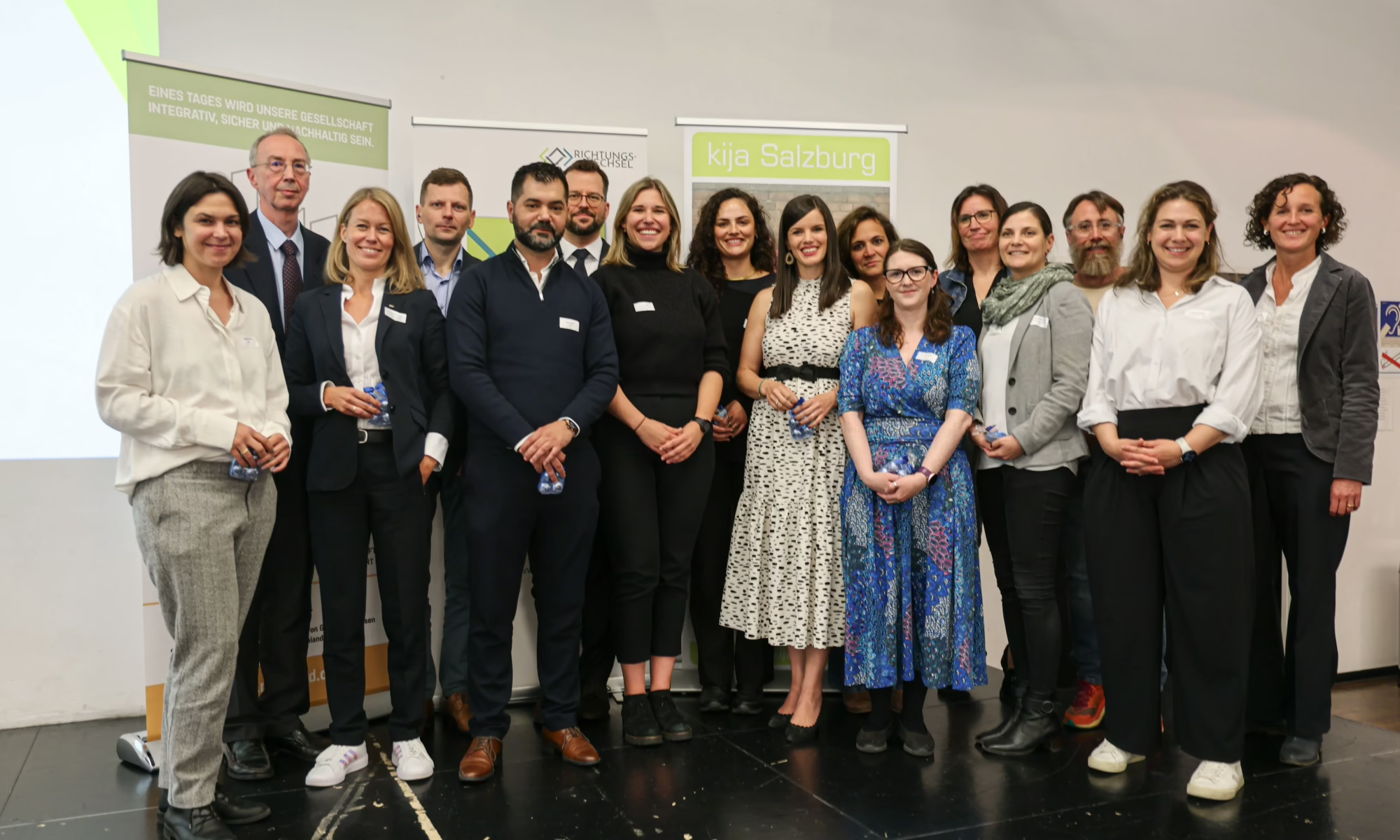
In May 2025, the first Youth Custody Conference took place in Salzburg. Richtungswechsel and Salzburg Children’s and Youth Advocacy initiated a meaningful dialogue about what a child-centred, rights-based, and progressive model of youth detention could look like in Austria.

Over 120 experts from 16 countries gathered to share insights and examine the feasibility of small-scale custodial alternatives. The conference showcased inspiring international practices and explored how such approaches might be adapted to Austria’s legal, political, and social contexts.

Institutional perspectives: Austria and beyond

The conference opened with insights from Katharina Dürr of the General Directorate for the Austrian Prison System. Dürr outlined the current state of Austria’s youth detention framework, emphasising challenges such as overcrowding, limited family proximity, and restricted access to support services within existing institutions. Her presentation highlighted the urgent need for reform to support young people in detention better and facilitate their (re)integration. 

Next, Karel Dvořák, the Czech Republic’s Deputy Minister of Justice,  described ongoing efforts in Czechia to move away from large-scale incarceration towards smaller, target group–oriented facilities more closely embedded in local communities. He showcased promising examples, such as an open prison for men and a probation house supporting reintegration, which already reflect key approaches to incarceration like dynamic security and trust-based relationships.

He emphasised the Czech Republic’s collaboration with the RESCALED network, notably through RUBIKON, the Czech member of RESCALED, and underlined the government’s intention to develop a context-specific detention house facility. Dvořák concluded with a clear commitment to realising the EU Council’s call for small-scale detention, stating:

His contribution reflected both a grounded awareness of current systemic challenges and a forward-looking dedication to transforming imprisonment into a more humane, reintegrative, and community-connected system.

Setting a new vision

Colonel Dipl. – Päd. Dietmar Knebel from the Austrian Ministry of Justice officially launched the conference, emphasising political will and the need for a justice system that prioritises young people’s development and societal safety.

Building on this foundation, Noa Shoshan, Knowledge Manager at RESCALED Europe, presented the movement’s core principles and vision: a paradigm shift from large prison institutions toward small-scale detention houses embedded in and supported by local communities.

She described these houses as accommodating a maximum of 30 residents, working closely with local services, schools, neighbours, and civil society organisations. She emphasised the need for a collective effort. RESCALED’s work goes beyond policy; it seeks to shift societal narratives around incarceration through knowledge sharing, raising awareness, and the cross-national exchange of best practices.

Importantly, Shoshan stressed that there is no one-size-fits-all model:

Therefore, implementation must be tailored to context and involve early community engagement to address scepticism and promote shared responsibility.

Overall, detention houses offer a more sustainable and effective approach to incarceration. However, they must be part of a broader ecosystem prioritising integration, differentiation, and community-based care.

Political momentum is increasing: all 27 EU Ministers of Justice recently issued a joint statement endorsing small-scale detention, and the UN Human Rights Council emphasised these models in a resolution on social (re)integration.

Model from practice: Estonia and Germany

Stanislav Solodov from Estonia’s Ministry of Justice outlined two initiatives to support young people’s reintegration. These efforts reflect Estonia’s broader strategy of combining state-led policy with NGO-driven practices to promote long-term change.

The monitoring programme connects young people aged 14 to 20 with trained mentors six months before their release. Building trust is a key aspect of supporting personal growth, helping to shift values and attitudes, and ultimately enabling sustainable behaviour change. The second initiative is the halfway house, operated in partnership with the Village of Hope. Up to 20 young people live in a structured, family-like environment in these small-scale residential settings.

Solodov emphasised that a minimum of nine months of long-term support is critical for success. Shorter interventions show little effect.

From Germany, Ulrich Weinhold and Irmela Abrell shared insights into the Seehaus e.V. facilities, where adolescents in conflict with the law live in supervised homes together with mentor families. Daily life in Seehaus follows a clear and structured routine, including school attendance, vocational training, shared meals, household responsibilities, sports, and group discussions. This everyday structure is designed to promote responsibility, rhythm, and a sense of community.

Instead of control and punishment, daily life is built on trust, accountability, and positive relationships.

A cornerstone of Seehaus is its commitment to restorative justice. Crime is seen as harm done to human relationships, and change is facilitated through dialogue, accountability, and active involvement of survivors, peers, and the community. Through this approach, Seehaus promotes communal living as a route to reintegration, focused on personal development and constructively resolving conflicts.

Austria’s opportunity to lead change

Throughout the Youth Justice Conference, participants expressed a common belief: youth detention should not merely aim to reduce harm but must actively support young people in growing, restoring relationships, and envisioning a future beyond deprivation of liberty. While some voiced concerns that Austria risks falling behind, others emphasised that the necessary momentum is already present. What is needed now is bold leadership and practical steps forward. 

Austria now stands at a pivotal crossroads. Experts, practitioners, and policymakers alike signalled a strong desire for transformation; one that embraces small-scale, human-centred approaches rooted in dignity, participation, and community.

The conference clarified that the necessary foundations are already in place: international inspiration, local expertise, and a wealth of practical models. Yet, the political will and societal vision remain to bring them to life. The examples of RESCALED, Estonia, and Seehaus, along with the voices of the Austrian professionals, highlight what is possible: an approach to detention that restores dignity, supports growth, and aligns justice with social integration. 

By initiating a pilot project grounded in these values, Austria has the chance to reform its system and contribute meaningfully to a growing European movement. A system that reimagines detention as a space for support, accountability, hope, and that gives young people a chance.

Detention houses legally embedded in Belgium: “There’s no way back now!”

Belgium legalises detention houses – RESCALED milestone for justice reform in Europe

VZW De Huizen, NGO and Belgian RESCALED Office, is proud to announce the recent legal establishment of detention houses in Belgium. This marks a significant milestone in our years of advocacy for a sustainable, humane, and meaningful penal policy. Our vision of detention, centred on small-scale facilities, differentiation, and community-integration, now has a solid legal foundation. This is an important step in the paradigm shift that we are trying to achieve with VZW De Huizen.

The Role of VZW De Huizen

VZW De Huizen has been a pioneer in the field of small-scale detention in Belgium and has already come a long way. Since 2012, we have been advocating for small-scale, differentiated and community-integrated detention houses, working tirelessly to bring this concept to the forefront of the Belgian political agenda. Over the years, we have built a large and diverse network, both nationally and internationally, comprising political contacts, policy-level stakeholders, the prison administration, social organisations, colleges, universities, and experts from various disciplines. Strong relationships with the press and media have also played a crucial role in VZW De Huizen’s journey.

Years of lobbying at the political and policy level, along with collaborations with the aforementioned stakeholders, have brought VZW De Huizen to where it stands today. The power of collaboration is evident in our story. Through joint efforts, widespread recognition of the new penal paradigm has significantly grown. This recognition has led to concrete outcomes within Belgian penal policy, such as the opening of the first small-scale detention houses in Belgium, including transition houses for individuals nearing the end of their sentence and detention houses for short-term sentences (below three years), as well as the legal anchoring of these new forms of detention.

But how did VZW De Huizen manage to legally embed detention houses, and where did this idea originate from? Within our General Assembly, various working groups were formed to gather the knowledge prevailing within the organisation and apply it in practice. The Sustainable Public Policy working group sought the best strategies to create long-term political support. They concluded that a legal framework was essential to realize a sustainable policy for detention houses. The group members then worked on developing this idea, exploring how and where detention houses could be incorporated into the Basic Law [1] and drafting a proposal. This proposal was subsequently forwarded to the appropriate political contacts. Throughout the process, VZW De Huizen continued to offer support and provide advice. The rest is history.

The Legal Foundation

The recent legal establishment of detention houses marks a significant milestone for VZW De Huizen and for penal reform in Belgium. The Basic Law of January 12, 2005, concerning the prison system and the legal position of detained persons now includes a clear definition of a detention house. The definition is as follows: “A prison specifically designated by the King, consisting of an autonomous small-scale facility embedded in the social environment and maintaining close contacts with it.”

Additionally, the amendment provides for the subsidisation of cities and municipalities with a detention house within their territory to cover the costs associated with promoting the integration of the detention house into the community and ensuring the accessibility of their services for residents residing there.

This legal foundation means that detention houses are now officially recognised within the Belgian criminal justice system and are no longer merely pilot projects that could be terminated at any time. By legally anchoring this policy, it ensures that the rules and guidelines cannot easily be altered by successive governments, providing continuity and stability. This is crucial for the long-term planning and implementation of sustainable practices in detention houses. The legal establishment not only provides a solid basis for the further development of detention houses but also ensures better protection of the rights of incarcerated persons in these facilities. The fact that cities and municipalities with a detention house on their territory are now entitled to subsidies may also offer additional encouragement to those who are hesitant.

Challenges and Future Perspectives

Although the legal establishment of detention houses is a positive step forward, significant challenges remain. While there is widespread recognition of the value of detention houses, further development of the concept is essential. The current detention houses are still too large, and the group of short-term offenders (sentences under three years) is too diverse. For example, the current detention houses in Belgium accommodate 57 individuals ranging in age from 18 to 90 years, convicted of various types of offences. It is crucial to focus on developing detention houses for different target groups, tailored to their needs and requirements. The maximum number of residents should also be determined by the needs of the target group.

Furthermore, there is an ongoing need to recruit suitable staff, and provide the necessary training and support for staff. It is also vital to increase public awareness and acceptance of this small-scale form of detention. The greatest challenge, however, remains the replacement of all traditional prisons with detention houses, rather than merely supplementing the existing prison system. Achieving a more humane, just and effective penal system requires this shift. The further rollout and development of detention houses will demand significant political courage. It is now up to the (re)elected politicians to prioritise this issue in the upcoming legislative term.

“Detention houses are now legally embedded in Belgian law! Patience is key to achieving results, but small-scale detention has proven its worth. If the next government continues to invest in this approach, we can finally start talking about meaningful detention! We are committed to this, and it must and will happen!”

In the future, detention houses could become an integral part of the Belgian criminal justice system, contributing to a more just and humane execution of sentences. The efforts of VZW De Huizen have shown that a different approach is not only desirable but also achievable. With the legal foundation as a strong base, the path is open for further innovations and improvements within penal execution. VZW De Huizen is proud of this progress but will continue to fight for a future where meaningful detention is carried out in small-scale detention houses, thereby contributing to restoration and reintegration. Together, we continue to build the inclusive, safe, and sustainable society of tomorrow!

[1] The Basic Law of January 12, 2005, is the most important law that regulates the rights and obligations of people in detention and also defines the fundamental principles for the execution of sentences. Consult the law here.

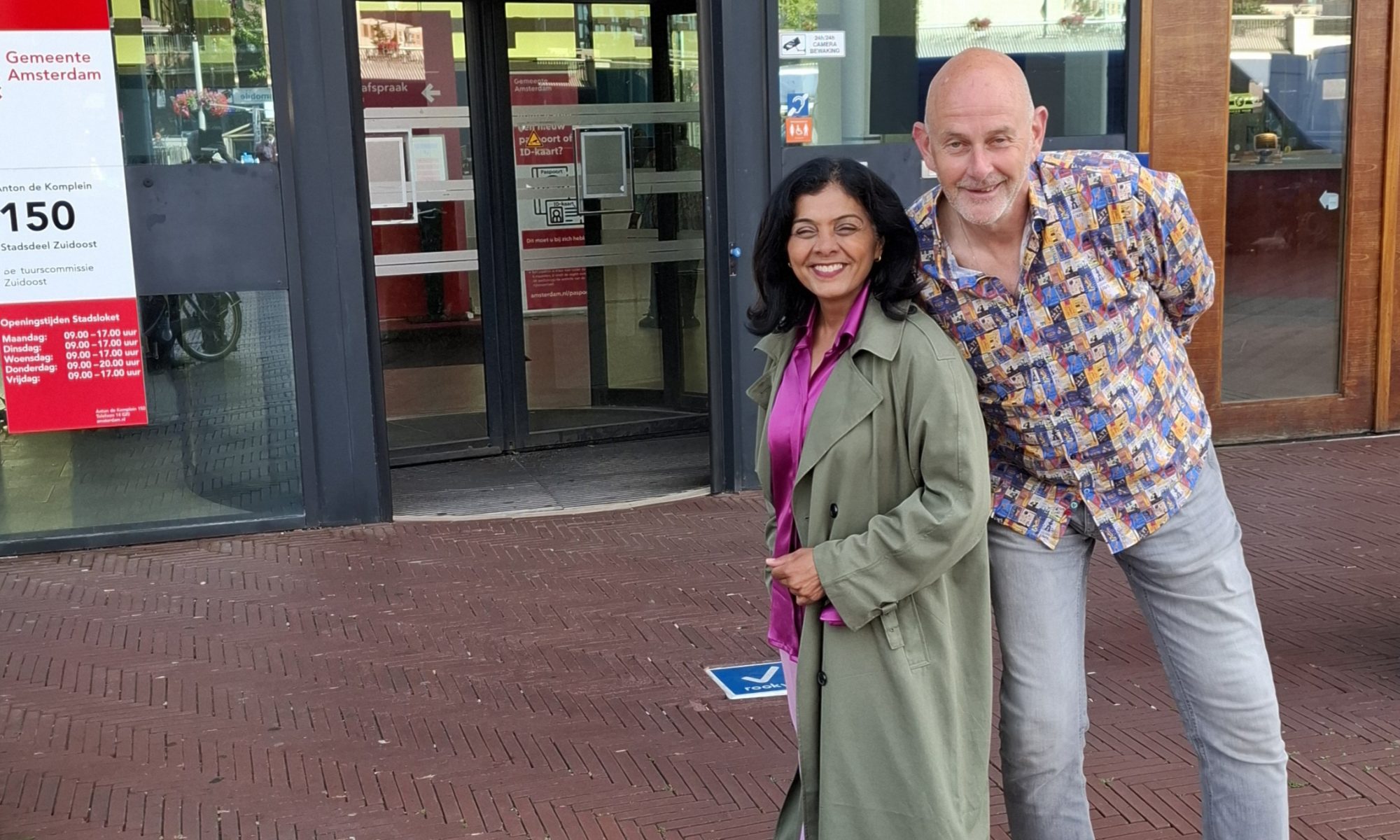
Case study Amsterdam Zuidoost – Restorative Cities

Amsterdam Zuidoost restorative city project – RESCALED case study on justice innovation

Through the INSPIRE project, Restorative Justice Nederland aims to refine the concept of a restorative city by identifying key principles, such as dialogue, community involvement, democracy and horizontal relationships, and urban design. In addition, the role of small-scale detention within a restorative city is explored. After a first article about Utrecht, Gert Jan Slump and Laura Verstraete now bring us the casestudy of Amsterdam Zuidoost in this blog.

The district of Zuidoost is a residential area in Amsterdam developed and built in the 1960s. Inspired by Le Corbusier’s ideas (influential architect and city planner), the urban planning in Zuidoost aimed to separate traffic flows and outdoor spaces vertically to enhance livability. However, this urban concept largely failed, leading to a transformation of the district. Some high-rise buildings were demolished and replaced with low-rise structures, while others were renovated, and traffic flows and outdoor spaces were largely integrated.

Currently, approximately 100,000 residents from 173 nationalities call Zuidoost home. It is recognised as an emerging vibrant district with numerous societal, religious, and cultural grassroots organisations that effectively collaborate with formal institutions. However, criticism persists regarding inadequate basic amenities in the district and significant social issues, particularly poverty.

Under the leadership of district chair Tanja Jadnanansing, Zuidoost is evolving towards a Restorative District, fostering development from within and from grassroots initiatives. The structure of the district can be characterized by six layers:

        1. Conflicts are a natural part of life and require suitable solutions and support for those involved. The aim is to transform conflicts into positive encounters through empathy and understanding
        2. Some conflicts have a public or criminal justice dimension. Even in these cases, dialogue and communication between the directly involved parties is crucial. These parties can rely on the support of law enforcement officials who work alongside them to find fair solutions. From the perspective of community justice, a positive concept of safety is central: it’s not just about reducing or preventing negative aspects, but about fostering positive ones. Justice is a dynamic concept. All of this is encapsulated in the motto “Law and Love.”
        3. Over the next twenty years, structural causes of (criminal) conflict such as housing, poverty, and inequality of opportunities will be addressed. Recognising and working towards rectifying systemic social injustices is inherent in a district where justice is prioritised.
        4. In addressing the structural causes of injustice, the focus is on what people and inhabitants themselves can contribute (their expertise and experiential knowledge) and what they need (their requirements). In every approach and conversation, the question of whether the right people are at the table is essential. In Zuidoost, the focus is on community circles that provide space for dialogue about needs and collaborative actions, facilitating the transformation of society into a community.
        5. When restoration is needed at the level of organisational structure and culture, Zuidoost takes action. This restoration process requires people to come together and step into the circle. The district aims to invite people to do so and explore old structures and organisational cultures that cause harm. Discussions about organisational-level restoration provide space for addressing what people need to undo organisational injustice. Subsequently, what is unjust becomes the focus of fair interventions, facilitated by breakthrough teams and similar initiatives.
        6. Even when it becomes evident that issues need to be addressed and rectified primarily at a systemic level, Zuidoost collaborates to tackle them together. Sometimes, the government itself is the aggressor and initiator. Incidents like the Dutch childcare benefits scandal have painfully highlighted the need for systemic restoration[1]. In Zuidoost, as a Restorative District, systemic injustices are brought to light, and the government and organisations stand side-by-side with residents in addressing them.

Some local elements of the Restorative District include the Krin Taki (a form of an honest and deliberative dialogue), the Neighbourhood Court, youth courts in schools, and the neighbourhood youth court. Additionally, there’s the mediation pool of young people and the interactive Honors College Law and Love program where students at the Vrije Universiteit Amsterdam develop ideas around justice in collaboration with organisations and residents of Zuidoost.

Small-scale detention in Amsterdam

Design De Tafelberg © de Alliantie

Amsterdam no longer has a prison (the Bijlmerbajes is closed and the prison capacity has been moved to Zaanstad). It’s intriguing to consider whether there could be space in Zuidoost for a small-scale detention house, perhaps within a community similar to De Tafelberg. Located on a site that previously housed a youth prison and later a closed youth care institution, de Tafelberg now has transformed into a living community. It provides housing for 290 young adults, including 60 with a background in youth care. This initiative by Levvel, a youth care institution, together with the housing association de Alliantie, was developed with the help of many other parties. The concept is called “live, learn, work & play.” It’s an ecosystem where residents are supported in various ways to form a community where personal support largely replaces professional assistance. Social entrepreneurs are part of the community, providing opportunities for work experience, internships, and workshops. The facilities are also available to neighbourhood residents. De Tafelberg is a community-oriented model that could potentially house a small-scale detention house, integrating incarcerated individuals with other citizens. The size ratio of different groups is crucial here.

What’s unique about the Restorative District of Zuidoost is that it doesn’t require a template for its development. Zuidoost is inherently a Restorative District, not created or confined by a framework, but naturally so. Thanks in part to the current district chair and recent developments like the establishment of the neighbourhood court and peer-led youth courts the concept is further strengthened. Over the next two years, work will continue within the outlined framework of the six layers to further develop and enrich it, connected to efforts to develop and establish a small-scale detention facility connected to existing facilities.

The smaller the better?

Illustration by Daisy D on Unsplash

By Helene De Vos, Executive Director of RESCALED

RESCALED supports the use of small-scale detention houses instead of large prison institutions. To make this plea concrete, ‘small-scale’ is defined as a maximum of 30 people per facility. This is based on research and international practices, which show that this scale facilitates more personal interaction and more direct communication and that it results in less bureaucracy and less procedures when compared to large institutions. Why maximum 30 though?

Smaller than 50 places

More than ten years ago, a team of Norwegian researchers measured the quality of life in all 32 closed prisons in Norway. They found that the experienced quality of life was significantly higher in prisons with a capacity of less than 50 places (Johnsen, Granheim & Helgesen, 2011; Johnsen & Granheim, 2012). In these small prisons, incarcerated people experienced their relationships with staff, their general treatment and their well-being more positively than those in larger prisons. Interestingly, these positive experiences were also found for frontline staff members, both in their interactions with incarcerated people and with their senior management. These findings are in line with other international research and suggest that prison facilities with a capacity of less than 50 perform better in areas that really matter to the people involved.

Yet, however interesting these findings are, they only tell part of the story. It would be too simple to conclude that all prisons with a capacity of less than 50 places perform better than larger prisons. One important observation is that almost all small-scale prisons in this Norwegian research had a capacity that was much lower than 50, with an average of around 25 places per prison. This observation was also made by architects who visited small-scale prison facilities for various research projects, like Sabrina Puddu (University of Cambridge & University of the Arts London) and Matt Dwyer (Local time). Even though they visited very different facilities in different countries and for different projects, they received similar answers to the question about the ideal number of people per facility: between 8 and 24-25. 

The meaning of numbers

So how about a capacity of 7, 26 or 49? Does this number really matter? It does matter more than one would think at first glance. As confirmed by the Norwegian research, the benefits of small scale facilities are related to the quality of the relationships between incarcerated people, first-line staff members and management, and more specifically to the nature of communication, feeling of involvement, sense of fairness and respect. Given the importance of relationships or social interactions, the scale should not be measured by the number of people, but by the number of individual relationships or social interactions between these people. For example, in a group of 4 individuals (person A, B, C, D), there are six possible interactions between them (A with B, A with C, A with D, B with C, B with D, C with D)1. With each additional person, this number of relationships increases exponentially. In a group of 24 people, there are 276 possible individual relationships and in a group of 30 people this becomes 435. When considering a prison or detention house with a capacity for 24 or 30 incarcerated people, we are rather talking about groups of 48 or 60 people (with a 1:1 staff-resident ratio), and the number of relationships between them will increase accordingly. When looking at these numbers, it is much easier to understand why it becomes challenging or impossible to really know each other individually in a facility with more than 24 or 25 incarcerated people. 

For the same reasons, there is also a minimum number of people needed to create the minimum number of interactions necessary for a healthy group dynamic. When Matt Dwyer visited facilities for young people, it became clear to him that this minimum is 8. The desired group dynamics were unlikely to emerge in groups with less than 8 young people. Also Sabrina Puddu was told that the minimum is 8, since a smaller group does not allow for enough variety in social interactions, which can then easily result in toxic relationships and conflicts. Similar experiences with tense social climates were heard in Norway, in the context of the very small local prisons that housed only 4 or 5 people (but have been closed down a long time ago). 

The value of constructive relationships

Of course, none of this is really about numbers. It is about people. The small number only helps to shape constructive group dynamics and interpersonal relationships, which are valuable for various reasons. First, when incarcerated people experience the relationships in a facility more positively, the levels of general well-being tend to increase, while the levels violence, disorder and self-harm decrease (Auty & Liebling, 2020; Johnsen et al. 2011; Liebling, 2004; 2011). Moreover, feelings of safety increase for most incarcerated people when staff is visible and approachable, and incidents can be prevented or more easily solved (Crewe, Liebling & Hulley, 2014). Second, a higher perceived quality of life during incarceration has been linked to reduced reoffending after release (Auty & Liebling, 2020). Third, the higher job satisfaction reported by frontline staff in smaller prisons also lead to reduced sick leave and eventually to reduced costs (Johnsen et al., 2011). Finally, the small-scale also contributes to better relationships with people from outside the facilities, because such facilities are more likely to be located in neighbourhoods that are easily accessible to staff, NGOs and visitors (Johnsen &.Granheim, 2012), and because small-scale facilities tend to be more visitor-friendly than large prison institutions, which is particularly relevant when the visitors are children.

From all the above, it is clear that the scale of detention facilities plays an important facilitating role in shaping a constructive ecosystem, and should therefore be limited to 30 people per facility, and more correctly to 8 to 25 people. At the same time, however, it should also be clear that the scale is only a facilitator and not a solution in itself. More is needed, but reducing the scale is a valuable first step.

Acknowledgements: I owe many thanks to Matt Dwyer and Sabrina Puddu for sharing their insights and research findings with me, which are far more relevant and nuanced than presented in this blog text.

  1.  This insight was explained to me by Matt Dwyer. ↩︎

Creating an inclusive environment: How detention houses could better serve the incarcerated LGBTQ+ Community

Inclusive detention house concept supporting incarcerated LGBTQ+ individuals – RESCALED initiative

Thandiwé Devriendt, the student social media manager at RESCALED, is a criminologist currently pursuing her master’s degree with a keen interest in forensic psychology and minority groups in vulnerable situations. From her studies in Criminology, work, and personal experience, she has chosen to write a blog post on the often underexposed topic of LGBTQ+ individuals in the criminal justice system. In her upcoming post, Thandiwé explores why detention houses, compared to traditional prisons, could offer a more humane and dignified detention experience for LGBTQ+ individuals.

The landscape of the criminal justice system for LGBTQ+ individuals is fraught with unique challenges and systemic inequalities that are often overlooked. Detention houses could be a way to address some of these issues, through their three principles: small-scale, differentiation and community-integration.

Status quo of the LGTBQ+[1] community in the criminal justice system

But what do the current numbers say? 

When examining the current numbers and information provided the minority group seems to face several challenges. Firstly, LGBTQ+ individuals are more likely to be incarcerated. LGBTQ+ youth and transgender people, in particular, are disproportionately more likely to enter the criminal justice system due to a history of bias, abuse and profiling (National Center for Transgender Equality, 2014).

Secondly, they are more likely to face abuse when residing in prisons. They are often victims of daily humiliation, physical and sexual abuse. Additionally, they are faced with the inability to speak about these experiences due to fearing it will get worse if you complain. The fear often prevents them from complaining. For instance the European Comittee for the Prevention of Torture and Inhuman or Degrading Treatment or Punishment (CPT) has met several transgender women held in male sections of prisons who reported a feeling of unsafety, verbal abuse by staff and in some cases sexual abuse and assault by fellow incarcerated people. Furthermore, many LGBTQ+ individuals are placed in solitary confinement for extended periods solely due to their identity. For example, a report published in 2020 showed that trans women in Honduras prisons tend to be more severely punished, often through extended periods of solitary confinement. These phenomena are often worsened by the poor conditions in the prison systems: overcrowding, physical and sexual violence & heavy reliance on solitary confinement are common (Penal Reform International 2021; CPT, 2024; National Center for Transgender Equality, 2014).

Thirdly, both staff and other incarcerated people contribute to the abuse and mistreatment of LGBTQ+ individuals (National Center for Transgender Equality, 2014; CPT, 2024).

Fourth, the CPT observed that transgender individuals in prisons potentially face higher risks of self-harm, suicide, and violence-related psychological trauma, paralleling the high risks observed outside prison settings. Research suggests that factors such as discrimination, family rejection, and internalized or externalized transphobia contribute to these risks. The LGTBQ+ youth in specific have often faced such challenges, more specific family rejection, homelessness and hostility by the safety net (f.ex. foster care). This not only heightens the risks of above mentioned phenomena but also paves a way to possible criminal behavior (CPT, 2024; National Center for Transgender Equality, 2014).

Lastly, transgender and gender nonconforming people can face additional forms of mistreatment. Although practices are changing, several facilities still reside strictly according to their genital anatomy, regardless of their gender identity. Consequently their vulnerability to abuse increases when accommodated with a different gender from which they identify with (National Center for Transgender Equality, 2014; CPT, 2024). 

Creating an inclusive environment according to the three principles

Where there are challenges, there’s room for opportunities, in which detention houses are one of them. Detention houses could offer several possibilities for the LGBTQ+ community who are currently incarcerated in large prison institutions. By focusing on the three key principles of detention houses —small-scale, differentiation, and community-integration — we can create a more supportive and restorative experience for LGBTQ+ individuals in the criminal justice system.

In small-scale detention houses, residents are given the opportunity to become more familiar with their environment and staff, fostering a sense of community and security. With fewer residents, the pressure on the staff is relieved. Consequently, the staff can obtain more personal contacts and insights into the group interaction, thus ensuring that any abuse or mistreatment by fellow residents or staff is promptly addressed and that any signs of suicidal thoughts or self-harm are early on noticed and treated.

Furthermore, small-scale detention houses can arrange flexible housing arrangements tailored to the needs and identities of LGBTQ+ individuals according to the judicial possibilities. This differentiated approach allows personalized solutions that ensure the safety and dignity of LGBTQ+ residents without disadvantaging them.  This setting may allow for LGBTQ+ individuals to be housed according to their self-reported identity rather than their genital anatomy, making it easier to respect their gender identity and reduce their vulnerability to abuse. This differentiated approach can be co-created by persons with lived experience (formerly/currently incarcerated & an LGTBQ+ member), by doing so one can create a truly succesful implementation and approach. 

Community-integration can be particularly challenging for LGBTQ+ individuals, who may face double exclusion due to their sexual orientation or gender identity and their criminal past. Community-integrated detention houses focus on preparing residents for successful reintegration by introducing them to supportive environments and resources. By fostering connections with neighbors and community members through activities and interactions, detention houses can help change perceptions and promote acceptance of both LGBTQ+ individuals and those with a criminal past. This approach not only aids in the successful community-integration of LGBTQ+ individuals, but also contributes to a more inclusive society. By utilizing the ecosystem of a detention house, LGBTQ+ individuals can more easily access essential services such as medical treatments for transitioning and therapy, ensuring comprehensive support and care compared to what is typically available in prisons. This is made possible by actively collaborating with actors in this healthy ecosystem to enhance accessibility and inclusivity in healthcare and support services.

By embracing these three principles and exploring legal and regulatory avenues, detention facilities can provide a more humane and dignified experience for LGBTQ+ individuals in the criminal justice system. This approach ensures they receive the respect, support, and opportunities they deserve. This blog post also serves as a call to civil society, especially in Europe, to delve deeper into and address the unique experiences and challenges faced by this community.


[1] While some findings originally pertained to a narrower category like LGTB, for this blog post, we have opted to use a broader term, specifically LGBTQ+. Our intention is to promote inclusivity, as we believe that the broader LGBTQ+ community encounters similar challenges.

Sources:

Nature-based detention houses

This post was originally published on 24th October 2023 by Penal Reform International.

In a context of climate crisis and rising costs, prisons, like all institutions, must take action to be more sustainable and minimise impact on the environment. In this blog, Wiep Fokker from Restorative Justice Netherlands makes the case for nature-based detention houses as an ecologically sustainable model for penal reform.

The climate and biodiversity crisis call for a commitment to sustainability in all sectors of our society. While this includes the prison system, there has been little talk of sustainable detention in Europe. It is high time we took a closer look at the ecological sustainability of detention that could contribute to future penal reform: Nature-Based Detention Houses. RESCALED is a European movement with the mission to support the use of detention houses instead of large prison institutions, with the aim that one day, societies are inclusive, safe and sustainable.

A detention house is based on three pillars: small scale, differentiation, and community-integration. There is not one perfect example of a detention house, instead, RESCALED is showing the spectrum of many possibilities to create nature-based detention houses in Europe. How can these houses help us make criminal justice fairer, more effective and environmentally friendly? And why is this shift crucial?

To start with the big ‘Why?’ of the story. You may wonder why it is necessary to add the ‘nature-based’ part to the concept of detention houses. According to the International Union for Conservation of Nature (IUCN), nature-based solutions “address societal challenges through the protection, sustainable management and restoration of both natural and modified ecosystems, benefitting both biodiversity and human well-being”.

This is important since the climate and biodiversity crises we are currently facing ask for precise and swift action. In 2015, the 2030 Agenda for Sustainable Development was adopted to translate the three dimensions of sustainability (social, ecological, economic) into 17 concrete goals for sustainably developed societies in 2030. While much of the focus to date has been on social sustainability, comprehensive solutions can be found in an interconnected combination of the three dimensions of sustainability: social (people), ecological (planet) and economic (prosperity). Therefore, nature-based detention houses could be defined as small scale, differentiated detention facilities embedded within the community, which protect, manage and restore surrounding ecosystems.

Let’s take a closer look at the dimension ‘planet’ and see what added value this – together with people and prosperity – could bring to our justice systems. Thus, let’s move on to the ‘How?’ of the story.

The meaningful ecological impact of detention houses can be ensured by working on both methods and materials: on the one hand, material changes require amendments in architecture, energy and food supply; on the other, changes in methods of activities, transport and waste management can reduce negative impacts on the environment. In this, the so-called ‘ecological footprint’ can be a helpful tool to measure the ecological impacts of detention houses on both a local and (inter)national level. This was, for example, calculated for the Dutch judicial organisation (DJI). The method covers the “total area of land and sea required to sustain an activity or population”, which includes environmental impacts and enables organisations to gain insights in their consumption or production patterns. The aim of nature-based detention houses would therefore be to make the ecological footprint as small as possible and to maximise their positive impact on the surrounding ecosystem.

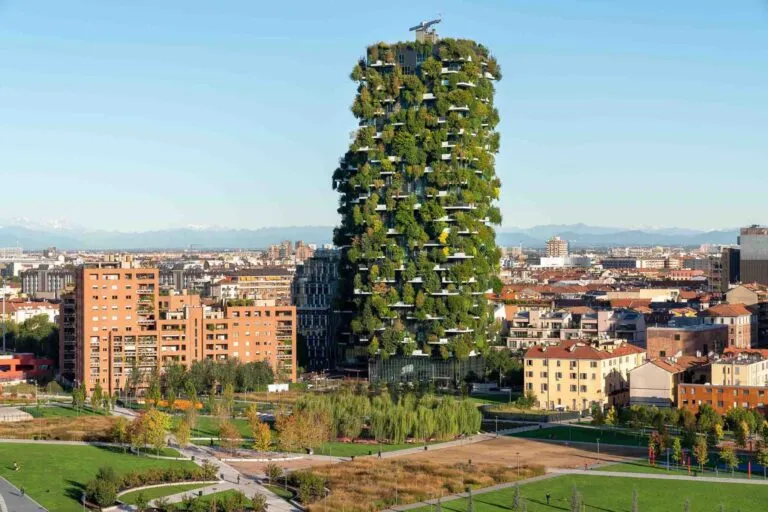
As for the material aspects, the architectural possibilities offered by detention houses can be promising. Such buildings could for example contain green facades, which is a proven way to contribute to the reduction of air and surface temperatures. Examples of such ‘Vertical Forests’ can be found in various cities around the world, inspired by architect Stefano Boeri.

Vertical Forest | Stefano Boeri Architetti
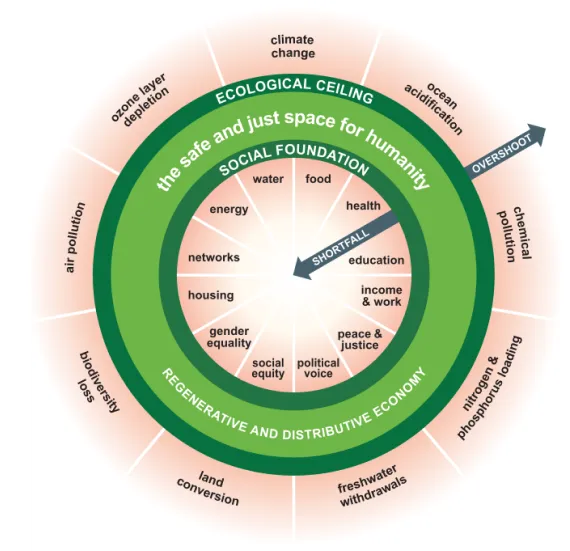
Doughnut model

The great amount of greenspace included in the inside and outside areas of nature-based detention houses would not only counter biodiversity losses, but also support the wellbeing of both incarcerated people and staff[1]. For example, the mere prospect of a natural living environment with vegetation and wooded area can result in a decrease in self-harm and violence among incarcerated people[2]. When it comes to the methodological aspects, in nature-based detention houses the focus should be on local and reciprocal collaboration and circular economy, for working in line with the ‘doughnut model’ (see below). Recycling of waste should be encouraged, both in the living environment and during working activities. Or think about sustainable meals for incarcerated people, with more plant-based nutrients and produced in an environmentally friendly way in their own vegetable gardens. These changes could be beneficial for both the environment as well as for the health of incarcerated people. 

Are you curious to read more about nature-based detention houses? An introduction to my research on the three levels of sustainability is published on the website of WISH-EU. From the beginning of 2024 onwards, RESCALED together with Restorative Justice Netherlands will share examples of the different aspects of nature-based detention houses as part of their continued work on the ‘Ecosystem’ of detention houses. Stay updated via the LinkedIn or Instagram of Restorative Justice Netherlands or LinkedIn or Instagram of RESCALED. For questions, reach out to me directly at wiep.fokker@restorativejustice.nl.

[1] Moran, D., Jones, P. I., Jordaan, J. A., & Porter, A. E. (2022). Nature contact in the carceral workplace: greenspace and staff sickness absence in prisons in England and Wales. Environment and Behavior, 54(2), 276-299. Boone, M., Althoff, M. & Koenraadt, F. (2016). Het leefklimaat in justitiële inrichtingen. Boom Lemma.

[2] Moran, D., Jones, P. I., Jordaan, J. A., & Porter, A. E. (2020). Does nature contact in prison improve well-being? Mapping land cover to identify the effect of greenspace on self-harm and violence in prisons in England and Wales. Annals of the American Association of Geographers, 111(6), 1779-1795.

The ecosystem of detention houses

Detention houses have emerged on the local, national and, more recently, even the European level, attracting the attention of policymakers, researchers, practitioners and civil society. These detention houses are based on three principles that reinforce each other: small-scale, differentiation and community-integration. If people are to be deprived of their liberty as a pre-trial measure or as a sentence, a detention house provides the right context for each individual. To fully grasp the value and potential of detention houses, we need to look beyond their observable features (like their scale or location) and consider all dimensions of their ecosystem. This blog text will explain this ecosystem approach and how this can be applied to justice reform.

Detention houses as healthy ecosystems

The ecosystem of a detention house is shaped by the individuals that are connected to the detention house, their communities and society as a whole, which all mutually influence each other. Incarcerated people mostly stay at the detention house, while staff members come and go on a daily basis. Visitors may enter for a shorter period of time and then leave again, which is also the case for psychologists, teachers, and social workers. Incarcerated people may also leave the detention houses to go to school and return in the evening, for example. All the individuals involved interact in a web of relationships, together shaping the social environment in and around the detention house. These relationships can be facilitated, or impeded or blocked, by other features like architectural design, work and education opportunities, psychosocial support, staff well-being, the use of technology etc. Considering all these dimensions in and around a detention house in a holistic way is what we call the ecosystem perspective on detention houses. In healthy ecosystems, all different elements reinforce each other when they interact to form an effective and harmonious system. For example, when the design helps to create a constructive social climate, when staff members contribute to relational security, when neighbouring schools are supported to include incarcerated people among their students etc. The reverse can also happen: a disruptive factor can throw the ecosystem out of balance. 

Towards safe, sustainable and inclusive societies

The ecosystem of a detention house is not limited to the physical boundaries of the detention house, nor is it limited to the boundaries of the criminal justice system. On the contrary, it exists at the junction of other ecosystems: that of the criminal justice system, the health care and mental health care system, the education system, the employment system etc. These different ecosystems interact and overlap, just as the ecosystems of forests and lakes do in nature. Such a holistic approach to detention houses is needed because of the complex nature of the social challenges they are facing and trying to meet. Crime and its root causes find their origin in the complexity of social issues. Therefore, societal reactions to crime cannot be isolated from the society. At the same time, it is clear that part of the current pressure on the criminal justice system is due to shortcomings in other systems, such as the mental health care system. These pressures cannot be solved by detention houses if not addressed holistically. The key is therefore to involve society in the implementation of detention houses and appeal to the shared responsibilities of justice, health care, mental health care, education, employment and other relevant systems in society.

Increasing the know-how on detention houses

So, how to grasp this ecosystem of a detention house? That journey has been kicked off on 20 March 2024, with more than 80 experts from across Europe, discussing 14 different topics related to detention houses and exploring their interconnectedness. The experts’ insights have informed the establishment of various Knowledge Workspaces managed by RESCALED, which are designed to dive into specific topics while always considering the broader ecosystem of a detention house. Each Knowledge Workspace serves as a space for connections between research, practice and policy, as well as different perspectives and backgrounds. These connections foster new insights, shared understanding and innovative solutions, and this know-how can subsequently support the implementation of detention houses in Europe, with continuous reflection and improvement of the existing knowledge. It is only through this comprehensive and systemic approach that we can be confident that the justice reform from large prison institutions to detention houses contributes to more inclusive, safe and sustainable societies.

We look forward to spearheading this process with the RESCALED Movement!